

One actor sets the price, another must obey it, and someone bears the risk when the book does not sell.
The answer seems simple.
The publisher sets the price.
That is how Uruguay’s fixed book price proposal has been explained in public. The publisher decides the retail price and bookstores respect it. No one is forcing every book to cost the same. No government official writes a number on the cover. Each book keeps its own price; what would be limited is the ability to sell it at a steep discount.
The explanation has one virtue: it is easy to understand.
It also has a problem: it does not entirely match the document circulated by the Uruguayan Book Chamber itself.
In its introduction, the document says that the market historically operated under a tacit rule: at the point of sale, the PVP—the public sale price, to use the document’s Spanish acronym—set by “the publisher and/or distributor” was respected.1
Later, when the document reaches the proposed statutory language, the formula changes:
Every publisher, importer or representative of books shall establish a uniform retail price (PVP), or final-consumer price, for the books it publishes or imports.
First it was the publisher.
Then the publisher or distributor.
Finally, the publisher, importer or representative.
These are not synonyms. They do not occupy the same place in the supply chain. They do not necessarily have the same costs, the same power or the same interests.
The Chamber’s own 2026 diagnosis of the book market introduces yet another formulation. In its summary of prices and discounts, it says that “the PVP set by publishers is respected” and serves as a common reference for retail outlets.2
So this is no longer one answer repeated in different ways. The materials alternately name the publisher, publishing houses, the publisher and/or distributor, and the publisher, importer or representative.
The difference may be the result of simplifying the message for a general audience. It may also reflect a market in which several functions overlap. But that is precisely why a law should not rest on the simplified version. It should define exactly who receives the power to set the price everyone else will have to obey.
And if a law is going to turn a private price into a public obligation, knowing who puts that price in place is not a technical detail.
It is the center of the debate.
The actor who appears and disappears
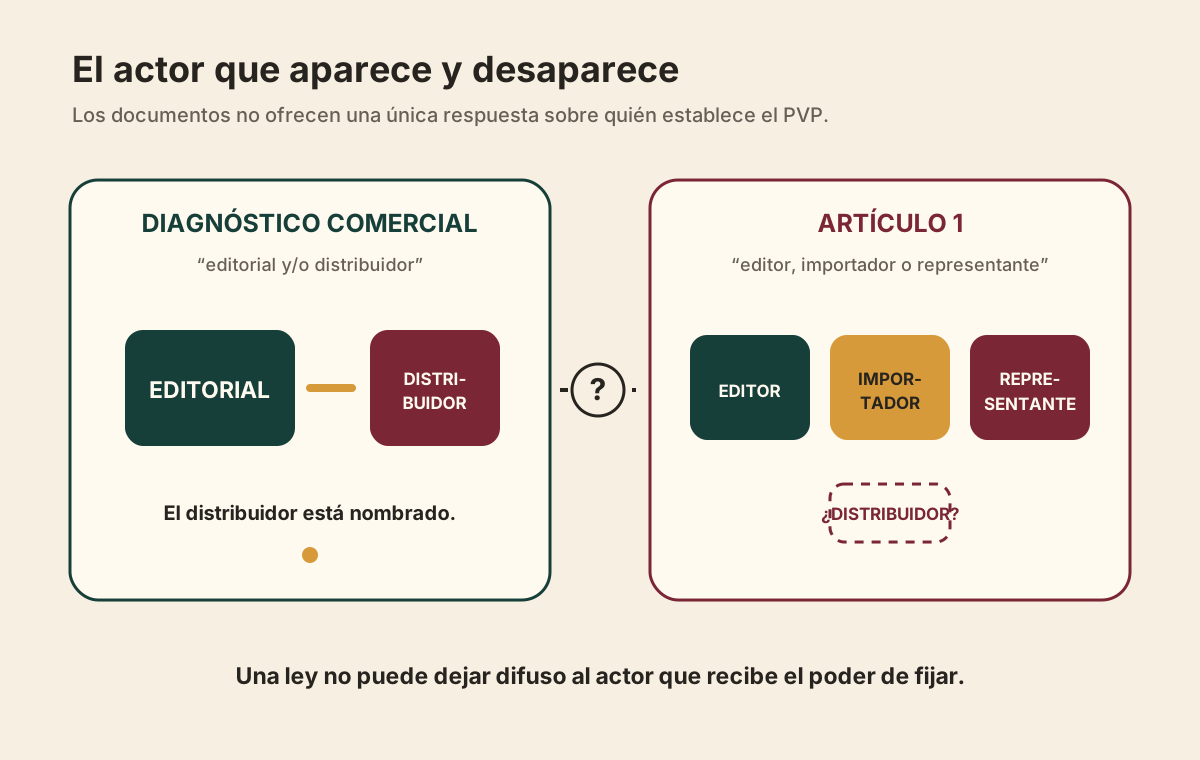
The distributor appears in the account of how the market works, but not in the article that assigns the power to establish the PVP.
The distributor occupies a strange position in the document.
It appears in the historical diagnosis. The Chamber acknowledges that the PVP could be set by the publisher “and/or distributor.” That wording matters because it describes a commercial practice that existed before the law: an upstream price that bookstores respected through a tacit agreement.
It also matches what Martín Seoane of Librería Amazonia has said in public. In an interview on Desayunos Informales, he explained that bookstores sign contracts with distributors requiring them to respect the retail price those distributors communicate.3
But when the document drafts the article that formally grants the power to establish the PVP, the distributor vanishes. The authorized parties become the publisher, importer or representative.
Why?
Is the distributor treated as a representative? Does it also act as an importer? Does it set the price, or merely communicate a number decided by someone else? Does it agree on that number with the publisher? Can it impose the price by contract even though the law does not name it? What happens when a single company performs several of these functions?
The text does not say.
There is no need to imagine a hidden scheme in order to identify the problem. Reading is enough. An actor present in the description of how the market actually works cannot disappear, without explanation, from the article meant to make that arrangement mandatory.
In an importing market, the publisher is not the whole answer
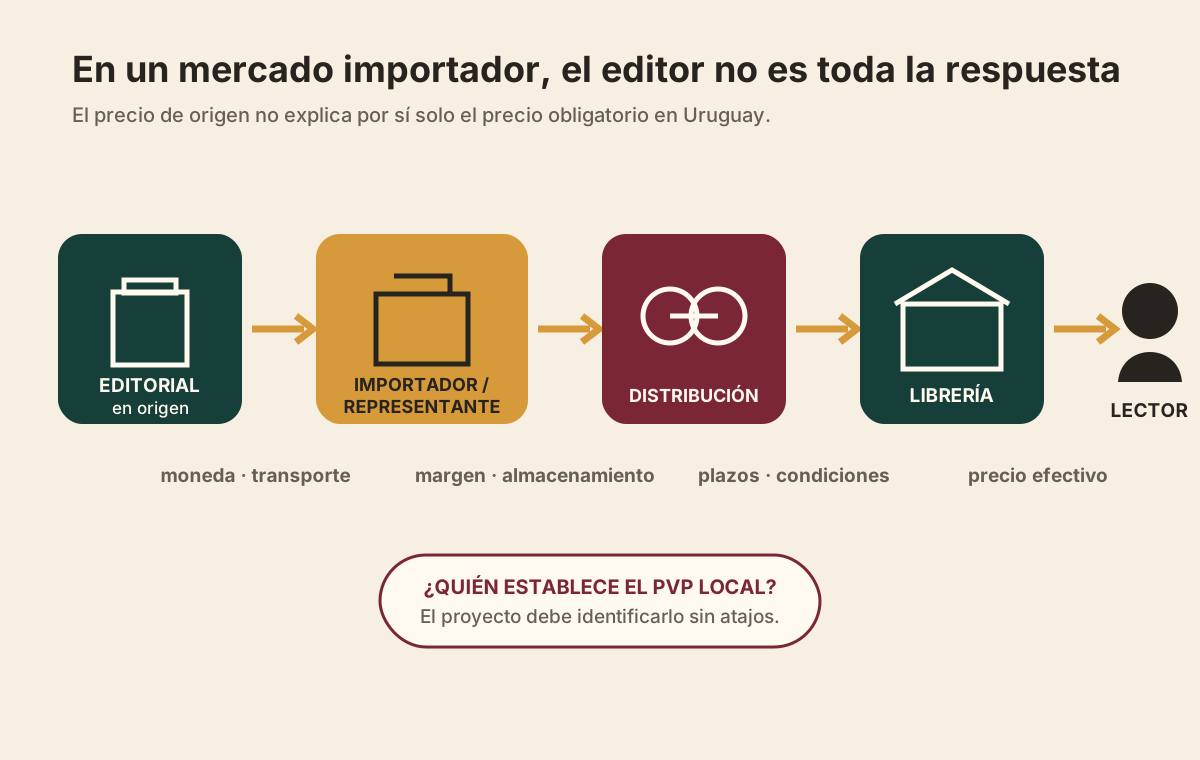
The price at origin passes through currency, transport, importation, representation, distribution and commercial terms before it reaches the reader.
“The publisher sets the price” can describe, with relative clarity, a book produced and sold by a Uruguayan publisher.
Even then, questions remain about costs, distribution and bargaining power. But at least there is an identifiable local actor that publishes the title and establishes its PVP.
With an imported book, the answer changes.
A Spanish, Argentine or Mexican publisher may set a price for its home market. That price alone does not explain what a reader in Montevideo, Salto, Rivera or Maldonado ultimately pays. Between one number and the other lie the acquisition price, currency, the exchange rate, transport, importation, storage, representation, distribution, the commercial margin and the risk that the book will not sell.
Article 1 itself acknowledges the problem by giving the importer or representative the power to establish the PVP of the books it imports. Article 2 goes a little further and defines the importer as “the principal depositary of the books of a particular foreign publishing company.”1
For imported books sold in Uruguay, then, the mandatory local price would not necessarily be established by the foreign publisher. It could be set by the importer or representative.
There is nothing inherently improper about that. Someone has to translate international costs into a Uruguayan operation.
But it should be stated clearly.
A law debated in the name of small bookstores may give binding force to the price set by an actor that controls the entry or representation of a foreign catalogue. Before passing it, we should know how that price is formed, who can change it and what safeguards exist against a concentrated position.
Setting is not the same as forming
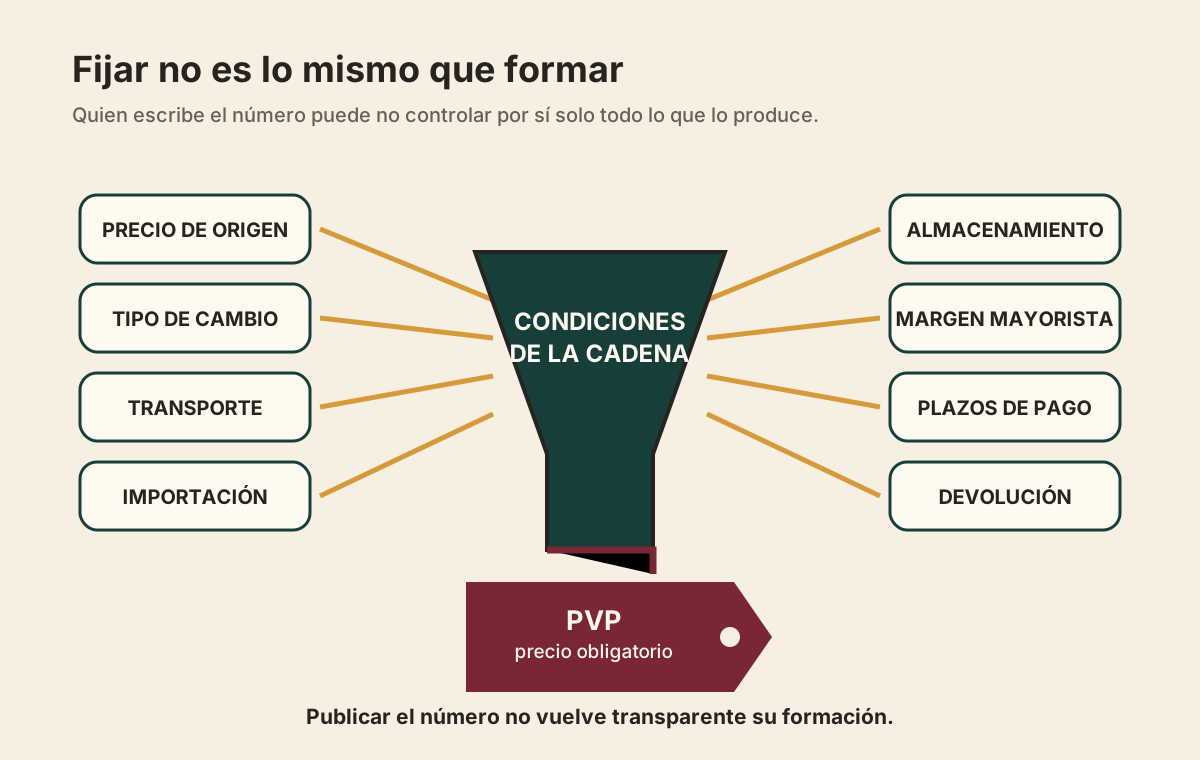
The party that communicates the PVP does not necessarily control, on its own, every condition that produces the number.
Even the question “who sets it?” may be too narrow.
A company can be formally responsible for writing down or communicating the PVP without having decided it alone. The final number may condense costs and terms established by several actors:
- the publisher’s price, or price at origin;
- rights, printing and production;
- transport and importation;
- exchange rates and financing costs;
- storage and logistics;
- the importer or representative’s margin;
- distribution terms;
- the margin granted to the bookstore;
- payment deadlines and the possibility of returns.
That is why identifying who enters the number on a price list is not enough.
We need to know who controls the conditions that produce it.
The proposal directly regulates the conduct of the final link. A bookstore would not be allowed to depart from the PVP by more than 10 percent during the first eighteen months, except under the listed exemptions. The enforcement authority could inspect, fine and even close establishments.1
Yet the text creates no equivalent transparency for the formation of the price that bookstores would be required to respect.
It does not say what information must accompany the PVP. It does not make its components public. It does not regulate wholesale margins. It does not establish minimum terms for small bookstores. It does not explain how different prices for the same title would be reconciled. It does not develop specific responsibilities for anyone who communicates an incorrect price or uses their position to impose abusive terms.
The State would not set the price.
But it would lend its power to sanction in order to make that price mandatory.
The same price does not mean the same margin
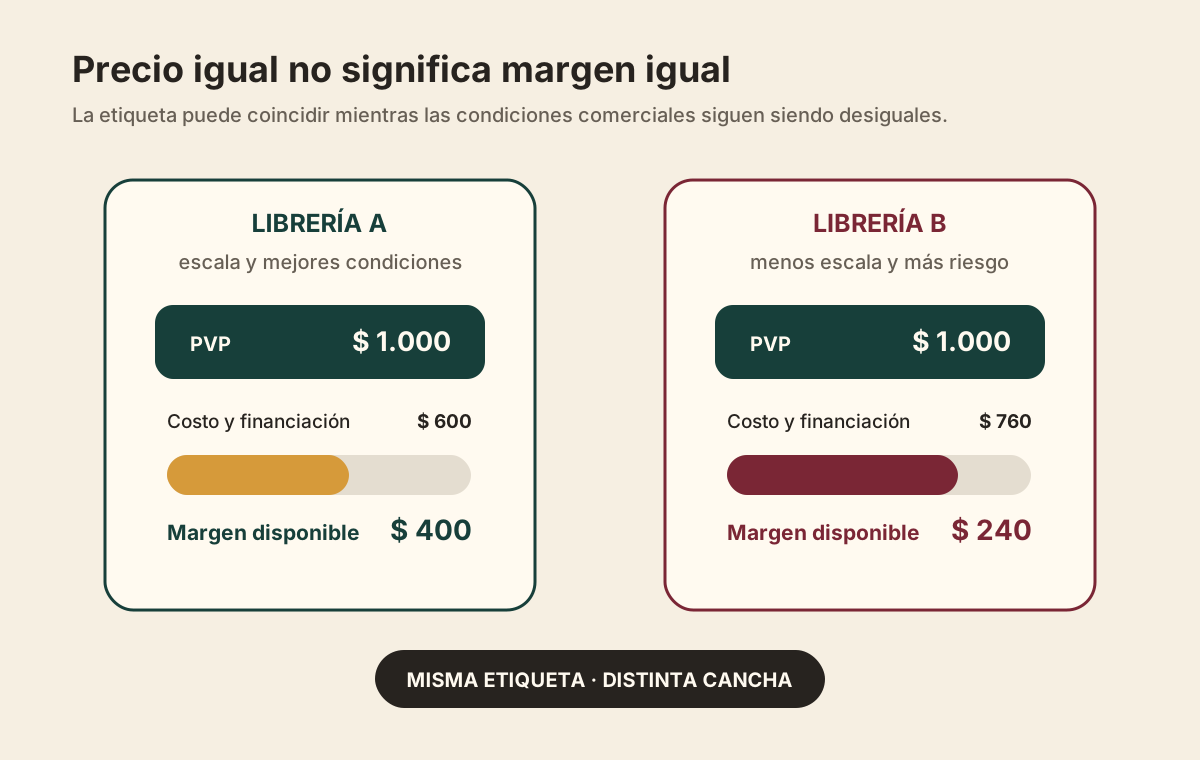
The price tag can be identical while costs, payment terms, returns and margins remain unequal.
The case for fixed book pricing often presents an image of equality: if every bookstore sells the same book at the same price, none can destroy the others with discounts they cannot afford to match.
That protection may be real. A small bookstore can hardly keep pace indefinitely with promotions financed by banks, platforms or companies with deeper pockets.
But equality in the final price does not guarantee equality in commercial conditions.
A documented wholesale term makes the problem visible in numbers. In a firm-purchase transaction reviewed by the author, a distributor gave an independent bookstore a 40 percent discount from the published price. The same figure appears as a commercial reference in one of the testimonies in the diagnosis. If a book has a PVP of 1,000 pesos, the bookstore pays 600. If it sells the book at the full price, it has a potential gross spread of 400 pesos.2
A public estimate from the Chamber’s own president helps place that transaction in context. In an interview published in May 2026, Álvaro Risso said that bookstores receive approximately 35 percent of the sale price, that the distributor receives between 10 and 15 percent, and that the author receives 10 percent. He also noted that the distributor may be the publisher itself or a third party.4
If all those percentages were calculated on the same base and the functions were counted separately, between 40 and 45 percent of the PVP would remain explicitly unassigned. It is reasonable to infer that this belongs to the publishing side and its costs, but Risso does not break it down or describe it as the publisher’s profit. He justifies the structure by pointing out that the publisher makes the initial investment and assumes that risk.
Neither the 400 pesos in the documented transaction nor the 35 percent mentioned by Risso is net profit for the bookstore. It must cover wages, rent, payment-processing fees, transport, financing, promotions and the risk that the book will remain tied up in stock or never sell.
The interview reduces part of the opacity, but it does not resolve it. It gives no source or methodology for the calculation, does not say whether it describes an average or a commercial rule, and does not define precisely what the distributor’s percentage represents: a share of the PVP, a gross commercial margin or net profit. Nor does it show how the division changes between domestic and imported books, firm purchase and consignment, or small and large bookstores.
A bookstore buying the book for 600 does not mean that the distributor “keeps” those 600. To know that, we would need to know what the distributor paid for the copy, what it cost to import and store it, how much belongs to the publisher and what margin each intermediary retains. The interview offers a rough outline; neither the proposal nor the diagnosis provides a documented, methodologically explained and segmented measurement of that division.
Nor do we know whether the same terms are offered to everyone. Two bookstores may both be required to sell the same book for 1,000 pesos while receiving very different purchase prices, payment periods and risks. One may receive a larger wholesale discount, longer terms, return rights, volume bonuses and lower financing costs. The other may have to pay sooner, buy fewer copies, struggle to return them and absorb more risk.
The interview itself describes the same problem. Risso argues that a small bookstore may lack the commercial terms that allow a large retailer to offer discounts of 20 or 25 percent, whether because of its lower sales volume or because it has no equivalent agreement with a bank.4
The reader sees the same price.
The bookstores do not necessarily receive the same margin.
The Chamber’s diagnosis confirms part of this inequality. It says that the capacity to discount varies with each bookstore’s scale, costs and agreements; that small bookstores have more difficulty accessing promotions or absorbing discounts; and that, in many cases, the cost falls on the point of sale. One testimony in the study says that, in certain promotions, the bank covers only part of the discount and the bookstore absorbs the rest, while the publisher or distributor gives up nothing and is paid under the usual terms.2
That testimony does not establish that every promotion works this way. Nor does a 40 percent wholesale discount allow us to reconstruct what every actor upstream earns. Both facts require us to ask which part of the chain gives up margin today, and who would capture the economic benefit if those discounts were limited tomorrow.
If the proposal is meant to protect small bookstores, it should measure whether they receive comparable wholesale terms and who actually bears the cost of promotions. Without that information, restricting discounts may preserve part of the retail margin while also entrenching, behind an identical price tag, inequalities the law does not even observe.
One sets it, another obeys: who bears the risk?
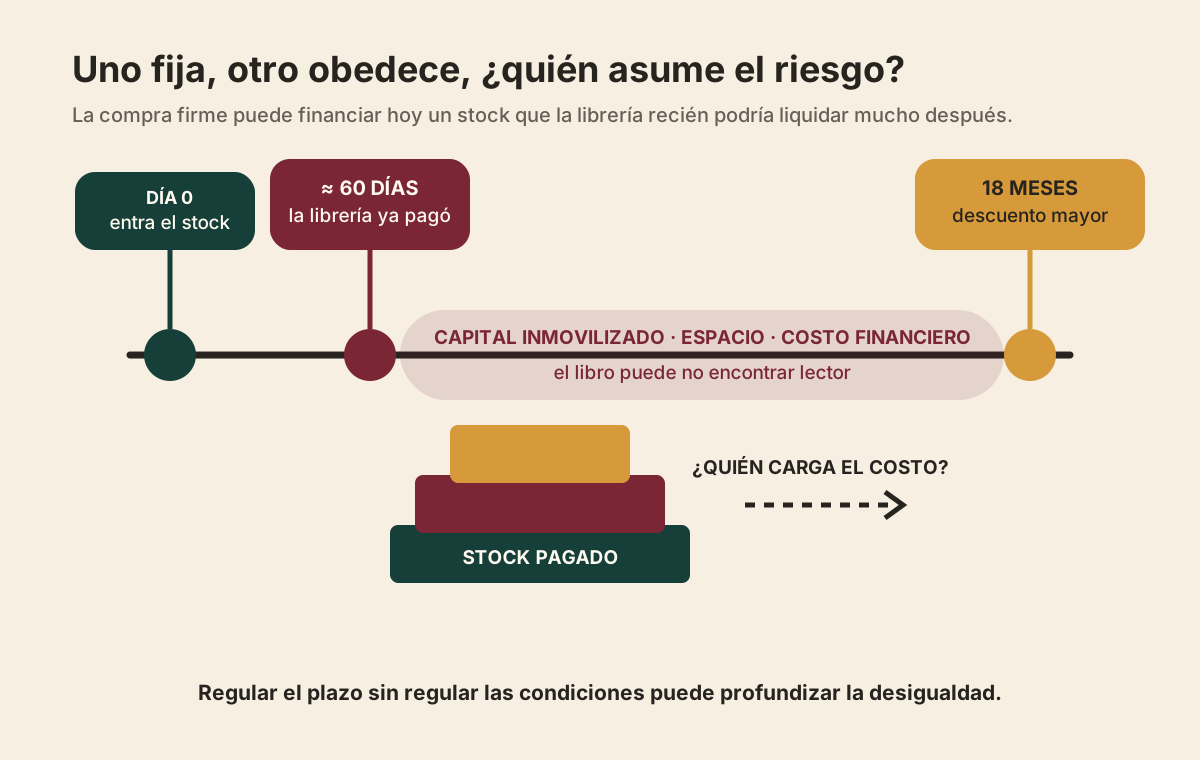
A bookstore may have paid for its stock long before it is free to clear it with a larger discount.
There is a third question the proposal does not answer: what happens when the fixed price does not work.
A book may arrive too expensive. It may become outdated. It may fail to find readers. It may sit still for months or years, taking up space, tying up capital and accumulating costs.
Who absorbs that risk?
The answer depends on terms the proposal does not regulate: firm purchase or consignment, payment deadlines, return rights, transport costs, restocking and the ability to clear inventory.
Here the diagnosis contains a particularly important warning. One of the intermediate positions collected during the consultation notes that bookstores buying “firm”—taking ownership rather than receiving books on consignment—pay distributors and publishers within deadlines that generally do not exceed sixty days. The bookstore therefore invests in each title and assumes the financial risk of the stock. Those working on consignment, by contrast, may hold copies for long periods without having paid for them.2
The same contribution warns that setting an eighteen-month period before books can be cleared or returned, without changing payment terms elsewhere in the chain, may disadvantage those that buy firm. Its conclusion is precise: any regulation should maintain a genuine balance between payment deadlines and commercial terms so that existing inequalities are not deepened.
This is not an outside objection to a study commissioned by the Chamber. It appears inside the Chamber’s own diagnosis.
Article 5 would allow larger discounts after eighteen months from each edition or importation. But even that release contains ambiguities. If the clock starts again with every importation, replenishing stock could alter the title’s commercial age. The text also does not explain how the relevant date would be established for each copy, or what happens with different shipments of the same ISBN.1
In the meantime, a simple asymmetry can emerge:
One actor sets the price.
Another is required to respect it.
And a third may bear the cost when the book does not sell.
If the bookstore carries a substantial share of the risk, restricting its ability to move the price is not automatically a protection. It may also restrict the tool the bookstore uses to recover capital, free shelf space or correct a purchase that went wrong.
The same ISBN by different routes
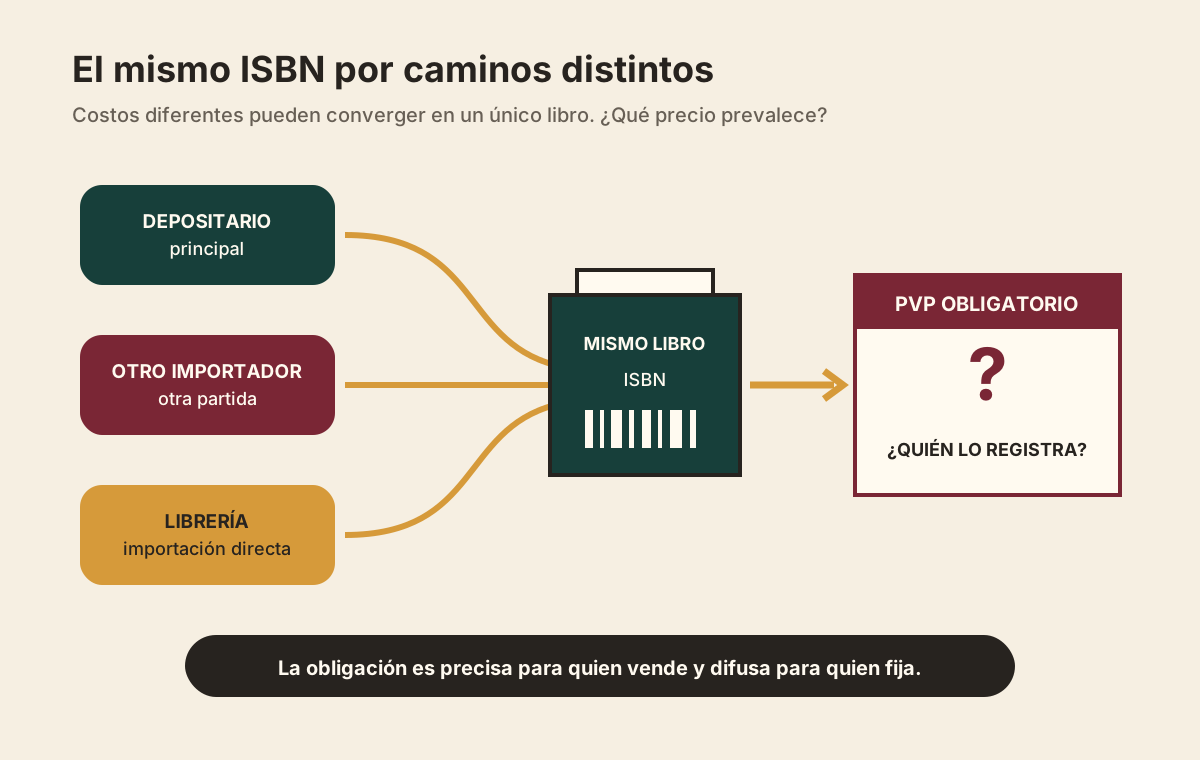
If the same book enters through different channels at different costs, the law must determine which PVP prevails and who is responsible for it.
The proposal also fails to resolve clearly a possible scenario: what would happen if the same book entered the country through more than one channel.
The text does not allow us to determine whether there may be more than one importer for the same ISBN or how that case would be resolved. Which importer would set the mandatory PVP? The first to register it? The principal depositary? What would happen if a bookstore imported the book directly? What about a special order placed by a reader? Could the same book have different entry costs and still be subject to one legal price?
The wording of article 2 makes the question more important still. If there is a “principal depositary” for a foreign publisher, what powers and obligations would other importers have? Would they have to obey a competitor’s price? Could they establish another one? How would a bookstore know which PVP is current?
Serious regulation needs to identify the price by ISBN, the person or company that established it, the date it takes effect and every later change. It also needs a public mechanism for resolving conflicts.
Otherwise, the obligation will be precise for the seller and diffuse for the price setter.
What Parliament should explain
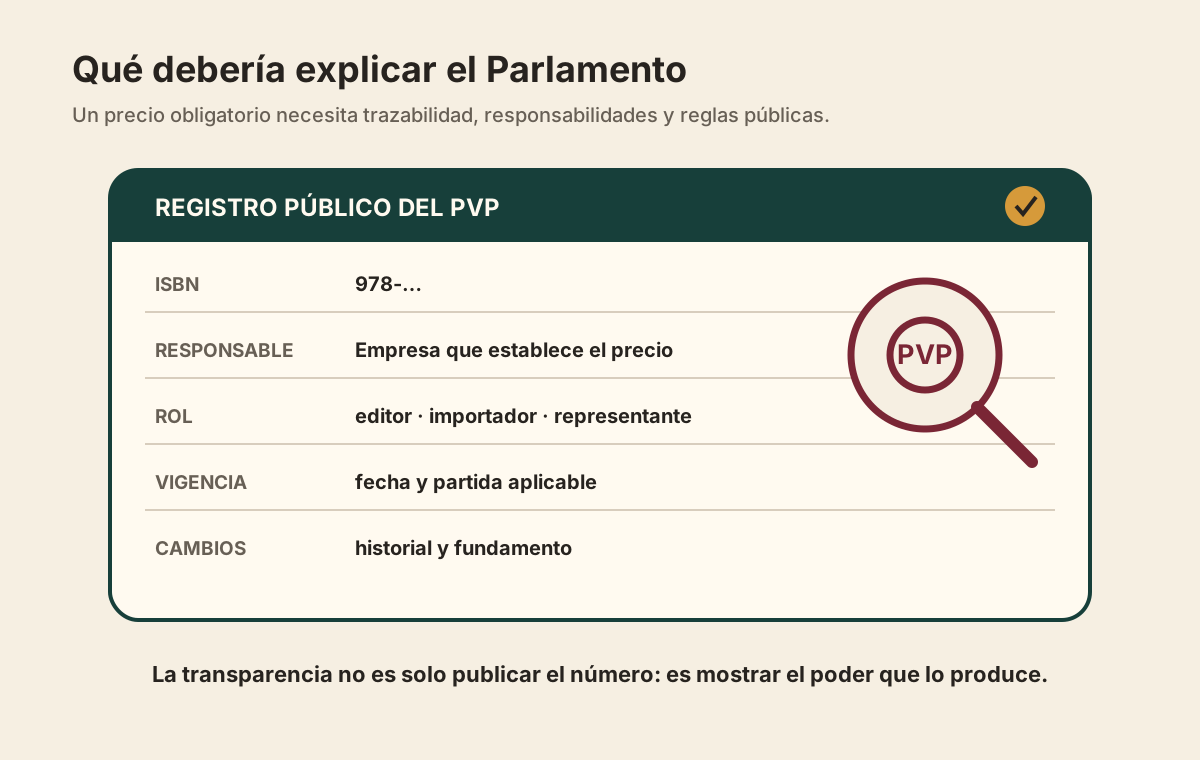
A register organized by ISBN would show who established the price, when it took effect and how it was changed.
Before limiting discounts and establishing sanctions, Parliament should demand concrete answers:
- Who may establish the PVP of a book published in Uruguay?
- Who establishes it when the book is imported?
- What is the legal difference between an importer, a representative and a distributor?
- Why does the distributor appear in the introduction but not in article 1?
- What happens when one company performs more than one function?
- Who sets the price if the same ISBN enters through different channels?
- Who may change the PVP, under what circumstances and with what public notice?
- How will the date of publication, each importation and the start of the eighteen-month period be recorded?
- What liability will fall on anyone who reports an incorrect PVP?
- What mechanisms will prevent a mandatory price from entrenching abusive terms upstream?
- What margin do small bookstores actually receive, and how does it compare with the margin of larger operators?
- Who bears the financial and commercial risk of copies that do not sell?
A public PVP register organized by ISBN would be a start. It should identify the responsible party, the effective date, every change and the applicable basis. But a register is no substitute for a debate about wholesale terms, margins, returns, deadlines and concentration.
Price transparency does not consist only of publishing a number.
It consists of making visible the power that produces it.
The question that comes before the discount
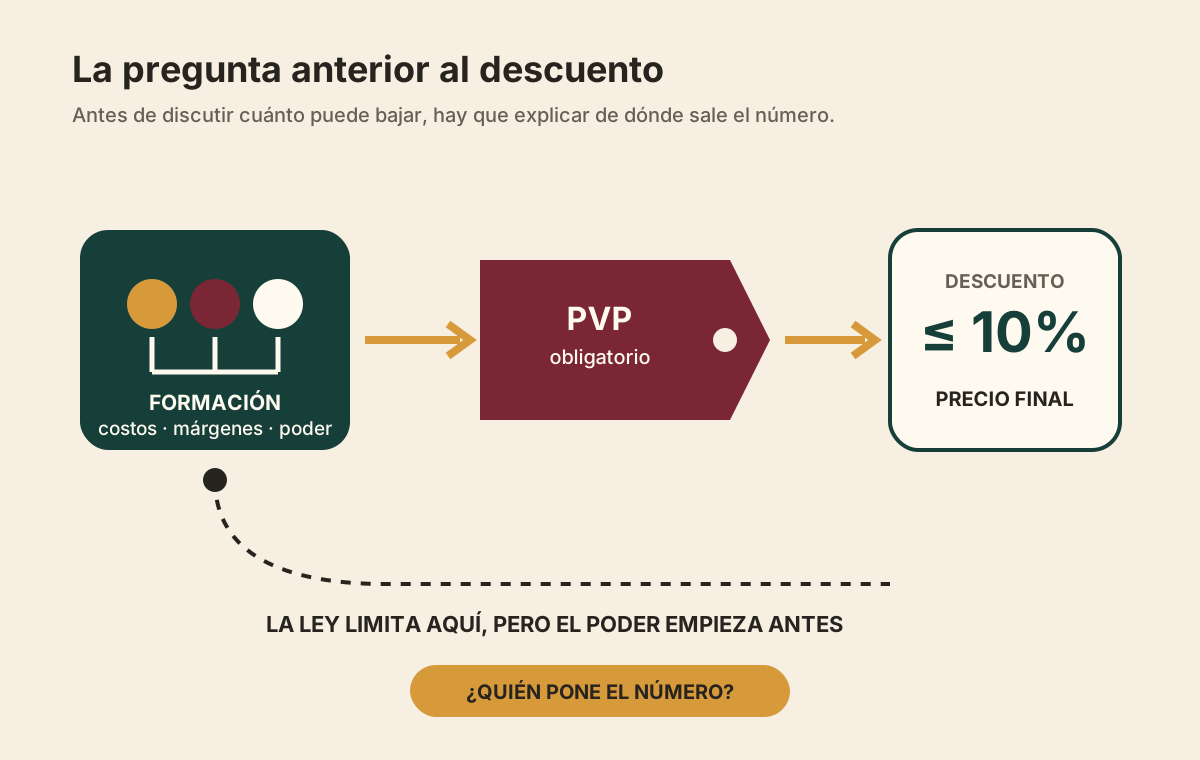
The law would act on the final discount, even though the power to form the price begins several steps earlier.
The public debate began by asking how much a bookstore should be allowed to discount.
But that is not the first question.
Before the discount comes the number from which it is calculated.
The proposal does not regulate how that number is formed or require its components to be disclosed. It regulates how far a bookstore may depart from the price established by another actor.
The Chamber says the publisher sets it. The introduction to its document says the publisher or distributor. The proposed articles grant the power to the publisher, importer or representative.
Those words are not interchangeable.
The difference matters because the proposal separates three positions: someone forms and establishes the price, someone is required to obey it, and someone carries the risk when the book does not sell.
It is possible that fixed book price regulation could help prevent predatory discounting and sustain a more diverse network of bookstores. International evidence gives us reasons to take that possibility seriously. But that potential benefit does not remove the obligation to examine how power is distributed within Uruguay’s book supply chain.
Before turning the PVP into a legal obligation, we need to know who forms it, who communicates it, how it is divided, who obeys it and who answers for it.
Because a fixed price law does not regulate how the price is formed.
It makes the result mandatory.
And it is still not clear who puts that number there.
References
Footnotes
-
Uruguayan Book Chamber, Hacia la reglamentación del precio único en Uruguay, document circulated in April 2026. The introduction attributes the PVP to the “publisher and/or distributor”; articles 1 and 2 assign its establishment to the publisher, importer or representative and define the importer as the principal depositary of a foreign publisher. ↩ ↩2 ↩3 ↩4
-
Uruguayan Book Chamber and Nómade Consultora, Diagnóstico del mercado del libro en Uruguay: prácticas comerciales, dinámica competitiva y hábitos de consumo. Estudio integral e informe ejecutivo, 2026. See especially pages 16—where one bookstore testimony uses a 40 percent margin as a commercial reference—64—on who absorbs discounts—and 72—on low commercial margins—in the full report; and pages 7–8 (“Precio de venta y sistema de descuentos” and “La competencia por precios”) and 21 (“Ley de Precio Único: posiciones intermedias”) in the executive report. The study includes twenty in-depth interviews and an online survey of 98 bookstores. The figure also matches a firm-purchase transaction documented by the author, invoiced on thirty-day terms with a wholesale discount of 40 percent from the published price. The underlying records are not linked because they contain personal and commercial data. One transaction confirms the mechanism, not its incidence across the market. See the diagnosis presentation page. ↩ ↩2 ↩3 ↩4
-
Desayunos Informales, “El presente de las librerías independientes y la competencia de las plataformas”, Teledoce, April 29, 2026. At 07:19–07:39, Martín Seoane says that bookstores sign contracts with distributors under which the communicated PVP must be respected. ↩
-
César Bianchi, “Álvaro Risso: de ‘en Uruguay se publica demasiado’ a la ley de ‘precio único’”, Montevideo Portal, May 16, 2026. Risso speaks as a bookseller, publisher and president of the Uruguayan Book Chamber. The percentages appear in his response about the author’s share; later in the interview, he says that small bookstores do not obtain the discounts available to some large retailers. ↩ ↩2