
Used books are bibliodiversity too
Some time ago, a bookseller friend made a radical decision: he stopped selling used books.
He removed the table he had in the middle of the bookstore and explained why with a sentence that still bothers me: “People prefer to buy a new book, even if it costs three or four times more.”
I was surprised. Not so much by the decision, because every bookseller knows where the shoe pinches, but by the argument. A few weeks later, however, the used books returned. “At least they pay the rent,” he told me.
The scene stayed with me because, in both moments, the reasoning was the same: the book measured by its economic performance. First it did not work because it did not rotate. Then it worked because it helped pay a bill.
But a book is something else.
It cannot always be reduced to the little number.
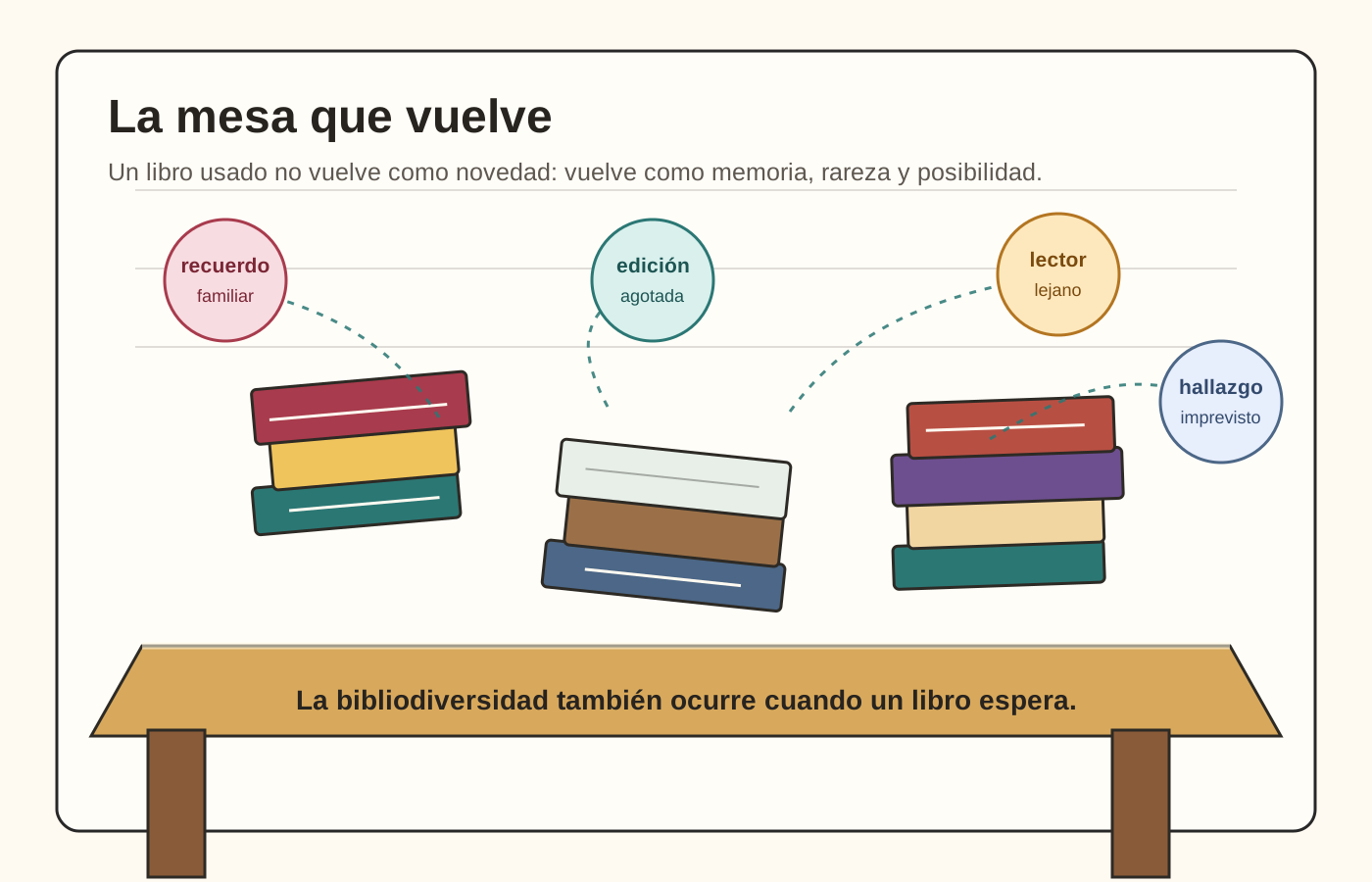
A used book does not return to the world as novelty. It returns as residue, memory, search and possibility.
The table that returned
A table of used books is not only a poor cousin of the new releases table.
It works with another temporality.
The new book arrives with campaign, launch, novelty, review, promise, distributor rhythm and the pressure of the season. The used book arrives from elsewhere. It may come from a house being emptied, a reader who moved, a dead library, a failed gift, a box rescued from humidity, a title no distributor carries anymore, a school edition with notes in the margin.
It brings dust, yes.
It also brings biography.
That biography is not romantic decoration. It changes the way the book meets the reader. A used book can appear when nobody was looking for it. It can lower the price of entry. It can make an out-of-print author visible again. It can interrupt the tyranny of novelty.
The table that returned was doing more than paying rent.
It was returning another form of circulation to the bookstore.
That distinction matters because bookstores often learn to speak the language of survival so fluently that they forget their own cultural arguments. “It pays the rent” is true, and sometimes it is the most urgent truth. But if that is the only justification available, the used book remains trapped in the same accounting that made it disappear from the table in the first place.
The rent matters.
The circuit matters too.
Bibliodiversity is not repeating titles
Bibliodiversity is often defended as the existence of many titles.
That is necessary, but insufficient.
If every store shows the same new releases, the same campaigns, the same safe bets and the same algorithmic promise of what “people are reading,” the number of titles can grow while the experience of diversity becomes poorer.
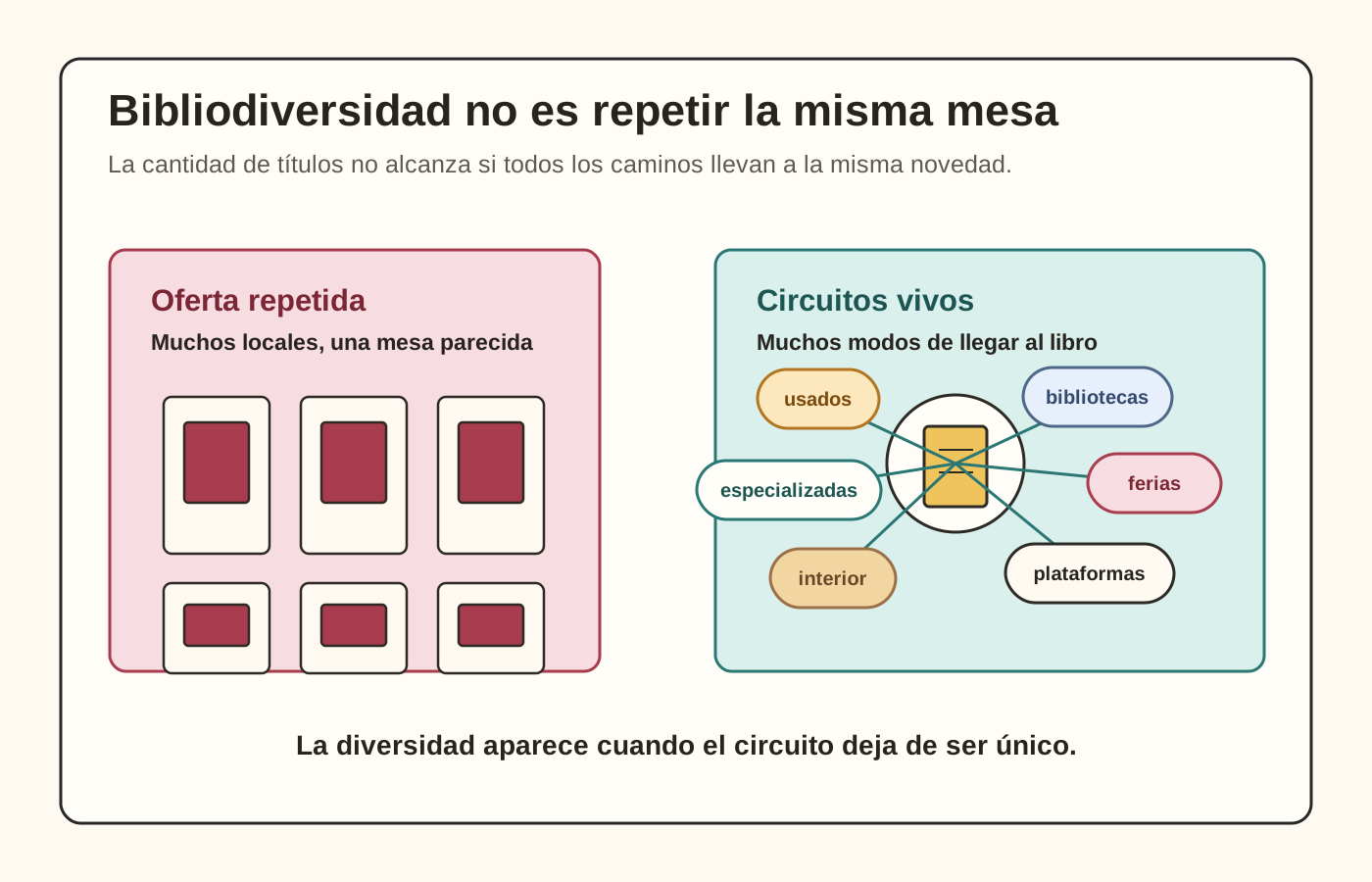
It is not enough to multiply points of sale if all of them push the same table. Diversity appears when the circuit opens.
A bookstore with used books can break that repetition. It allows books from different moments to sit together without asking permission from the marketing calendar. It lets a forgotten essay stand beside a new novel, a school classic beside a political pamphlet, a local history beside a book nobody ordered but someone will need.
That is bibliodiversity too.
Not only the diversity of catalogues.
The diversity of circuits.
The same title can mean different things depending on the circuit that carries it. A book pushed by a campaign, a book found in a used box, a book recommended by a bookseller, a book inherited from a friend and a book ordered from a platform do not enter the reader’s life in the same way. Bibliodiversity is not only a census of titles. It is a diversity of encounters.
If all encounters are organized by the same commercial grammar, the catalogue may look wide while reading becomes narrow.
The window as literary criticism
A bookstore window is an argument.
Even when it pretends not to be.
Every table says something about what deserves attention. Every pile gives a book more chance of existing. Every absence also speaks. The bookseller does not simply display inventory. The bookseller edits a scene of reading.
Used books sharpen that editorial work because they do not arrive already organized by novelty. There is no campaign telling you what to place first. There is no publisher’s email explaining the central title of the week. The bookseller has to look, remember, compare, risk, choose.
That choice is criticism.
It may be modest criticism.
It may be commercial criticism.
But it is criticism: a form of saying that this book, here, now, with this reader in mind, deserves another chance.
The little-farm effect
There is a temptation in small bookstores to become a little farm of survival.
Everything must rotate.
Everything must pay its place.
Everything must justify the square meter.
The pressure is real. Rent is real. Salaries are real. Taxes, electricity, card fees, distributors, returns and dead stock are real. No one should ask a bookstore to become a museum of noble losses.
But if the only criterion is rotation, the bookstore becomes a shop like any other.
It loses the strange part of its value.
The used table can be inefficient in a narrow sense and still produce cultural value. It can form readers, rescue paths, broaden access, keep local memory in circulation and create the kind of discovery that no campaign can manufacture.
The challenge is not to ignore the numbers.
It is to stop believing the numbers exhaust the book.
There is a false realism that says only the number is real. Everything else is poetry, nostalgia or self-deception. But the number itself is produced by a scene: where the book was placed, who recommended it, whether it had time, whether the cover lied, whether a reader trusted the table, whether the price allowed the risk.
Sales data is information.
It is not ontology.
A book that did not sell in one arrangement may live in another.
Specializing is choosing
Specialization is not snobbery.
It is a way of taking responsibility.
A bookstore cannot be everything. It can, however, decide what kind of relation it wants with its readers. Used books make that decision visible. A table of used books can become random accumulation, or it can become a slow portrait of the bookseller’s judgment.
Randomness is not the same as openness. A pile can be democratic in price and still careless in form. The work is to make chance readable without killing it. The used table should allow discovery, but discovery improves when someone has cleaned, sorted, grouped, remembered and placed the books with a minimum of intention.
What enters?
What is rejected?
What is repaired?
What is cleaned, priced, grouped, recommended, rescued?
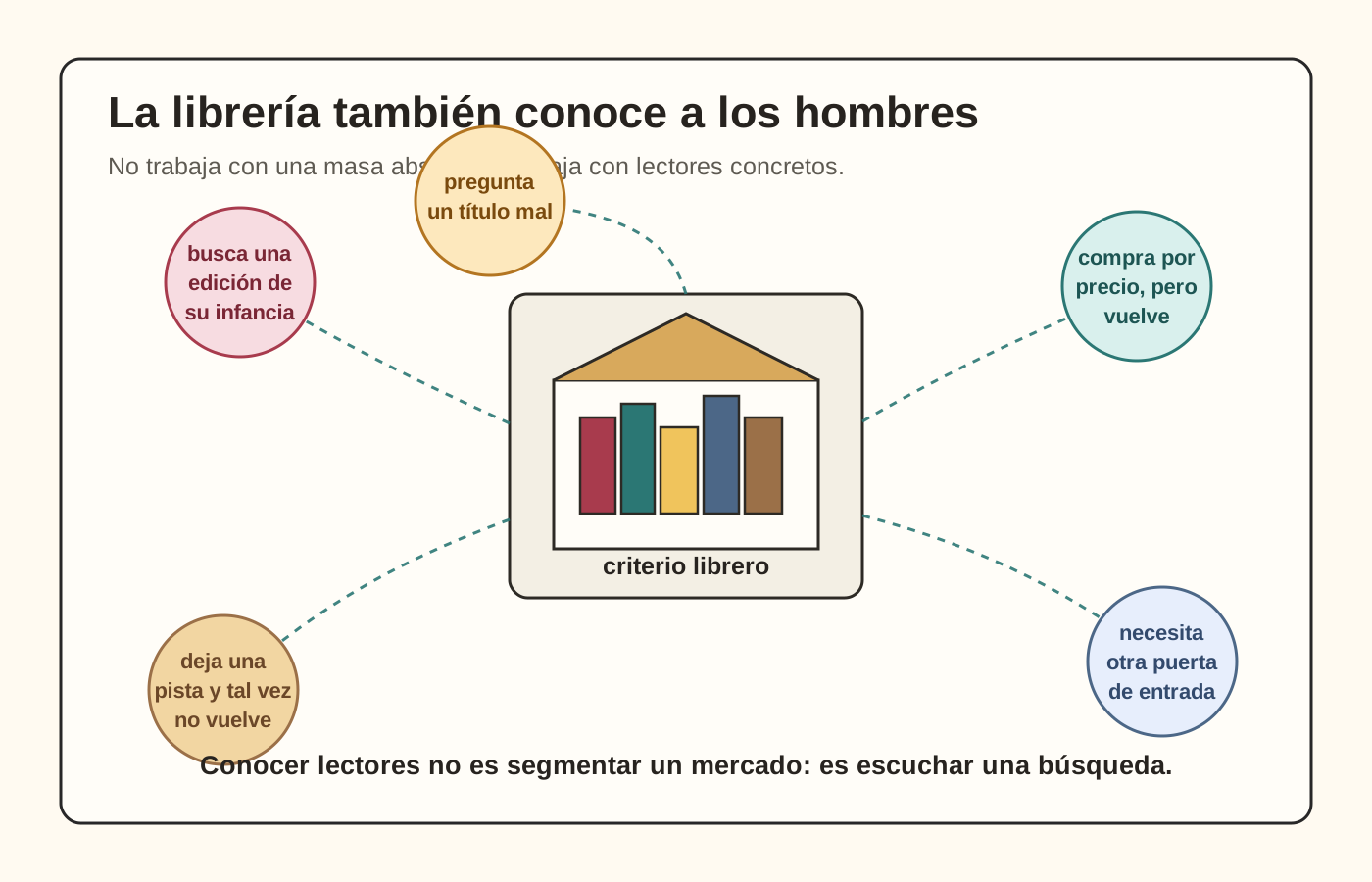
If publishing is knowledge of people, a bookstore is situated knowledge of its readers.
Giulio Einaudi said publishing is knowledge of people. The phrase also serves for bookstores. A good bookstore knows readers not as data, but as situated desires: the person who returns to poetry after a divorce, the teenager who asks for horror and leaves with Onetti, the teacher looking for affordable editions, the old customer who trusts one recommendation a month.
That knowledge is not scalable in the usual sense.
That is why it matters.
It is also knowledge that cannot be bought fully formed. It appears through repetition: the same reader returning, the same title asked for in different ways, the same mistake corrected, the same local school ordering the same book, the same author suddenly becoming necessary because something happened in the city.
Platforms know patterns.
Booksellers know situations.
The long tail also has booksellers
The internet promised infinite shelves.
In part, it delivered them.
A platform can hold more titles than any physical store. It can find the obscure book, the out-of-print edition, the forgotten manual. Chris Anderson’s long tail described the economic power of markets where low-demand items could survive because storage and search changed.
But availability is not orientation.
The long tail without mediation can become a desert of options. A reader can search, compare, filter and still remain alone before abundance. The bookseller does not compete with the platform by pretending to be infinite. The bookseller competes by making finitude meaningful.
The used book table is a small long tail with a human face.
It does not contain everything.
It contains a possible path.
And that path can be more important than total availability. The platform asks the reader to know what to search for. The used table allows the reader to discover what they did not know how to name. That is a different cultural operation. It makes room for accident without abandoning judgment.
Discovery is not the same as search.
The price makes the book transparent
Used books also disturb the mythology of price.
They show that the value of a book is not identical to its price, but price still matters. A lower price can open a door. It can allow risk. It can let someone buy an author without being sure. It can return books to readers who were priced out of novelty.
The fixed-price debate around new books is important, but it should not erase used books from the ecosystem. A cultural policy that defends bibliodiversity while treating used books as marginal has not understood the full circuit.
New books need protection from predatory discounting.
Used books need recognition as part of circulation, access and memory.
Both questions can coexist.
In fact, they should. New books and used books are not enemies. They are different moments in the life of reading. A reader may enter through a cheap used copy and later buy new books from the same author. A used edition may keep an author visible until a new edition becomes viable. A bookstore that handles both can teach readers that the book is not exhausted by its first commercial cycle.
That is why treating used books as a threat to the new-book economy is too narrow.
They can also be its memory and its seedbed.
The “it sells” and the false bestseller
There is a sentence that kills judgment: “it sells.”
It sounds empirical.
Often it is only resignation.
A book can sell because it was pushed everywhere, because a campaign made it unavoidable, because algorithms repeated it, because bookstores had no better-supported alternative, because the publisher bought visibility, because the market confused noise with proof.
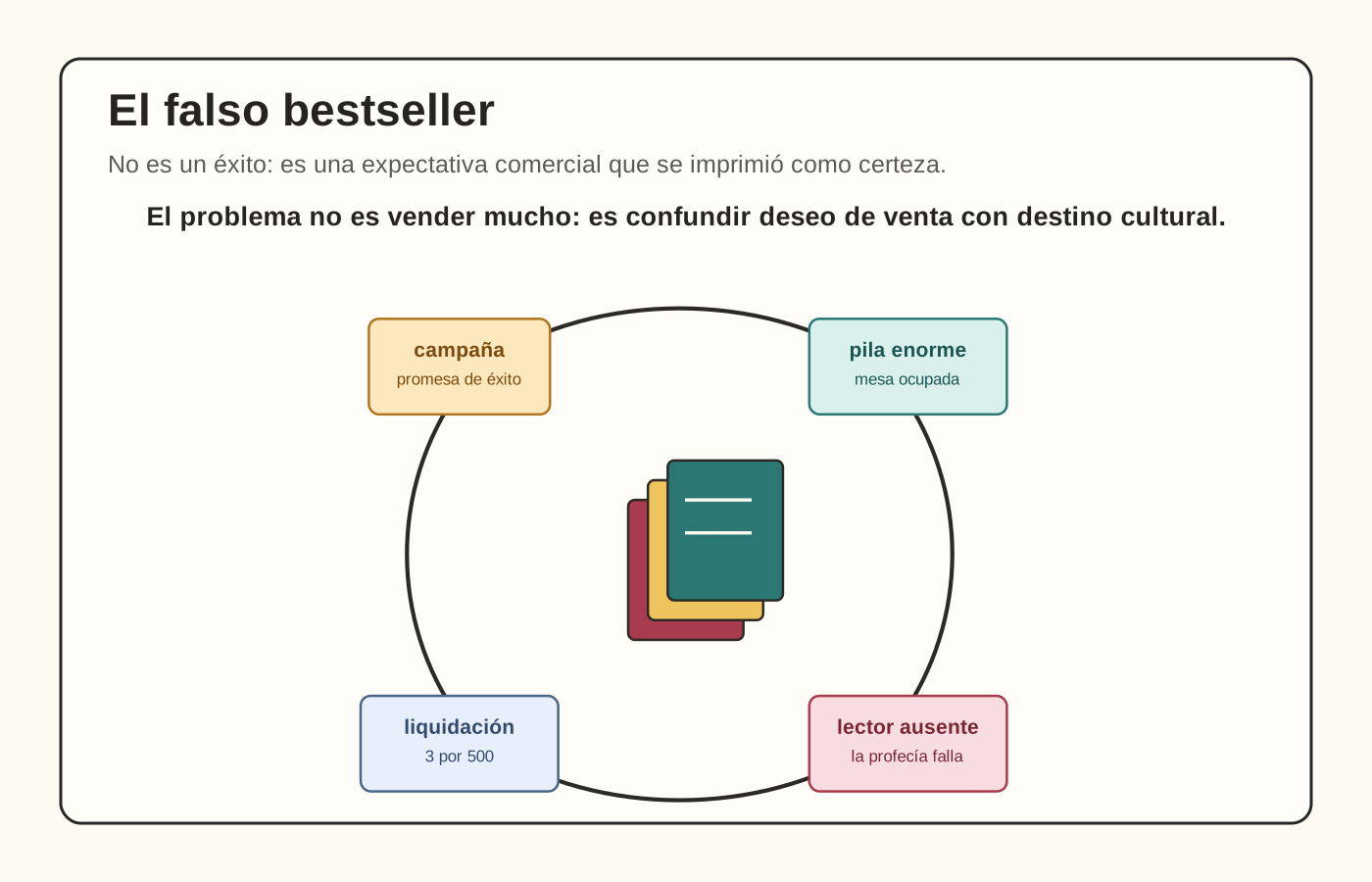
The false bestseller does not fail only as a book: it fails as a commercial prophecy.
The false bestseller is not simply a book that fails. It is a prophecy that organizes the shelf before reality has spoken. It says: this is what people will want. Then the whole chain behaves as if the sentence were already true.
Used books introduce another kind of evidence.
They show what remains after the campaign.
They show which books return, which are abandoned, which survive in the hands of readers, which can be found again without publicity.
That information is not perfect.
But it is honest in a way the launch table often is not.
There is a cruelty in the false bestseller cycle: it uses the reader as proof after having manufactured the conditions of proof. “Everyone is reading it” often means “everyone was shown it.” The used shelf, by contrast, exposes another afterlife. It shows what was kept, what was discarded, what returned too quickly, what is searched for after the noise has passed.
It does not deliver a final truth.
It complicates the first one.
A bookstore is not only a shop
A bookstore is a place where books pass through hands with memory.
That sentence may sound sentimental, but it is materially true. Books arrive, leave, return, are recommended, exchanged, forgotten, found, reserved, touched, cleaned, repaired, misremembered, discussed. The shop is also a local archive, a social sensor, a classroom without enrollment and a small machine of trust.
Used books intensify that function because they bring the city back into the store. They carry old school programs, former owners, local editions, discontinued collections, political moments, religious libraries, family shelves, private obsessions. A used table is sometimes the unconscious archive of a place.
That archive is fragile.
It can be thrown away as clutter.
It can also become a map.
If we only measure it by units sold, we misunderstand it.
If we only romanticize it, we also misunderstand it.
The point is to hold both truths: a bookstore must survive economically, and its value exceeds survival.
Used books make that tension visible.
Back to the table
So yes, the used table may pay rent.
Good.
Rent matters.
But it also does something else. It tells the reader that the book did not begin this morning and will not end with this season. It tells the store that circulation is more complex than novelty. It tells the cultural debate that bibliodiversity is not a slogan about catalogues, but a practice of keeping paths open.
The table returned.
That return was not only commercial.
It was a small correction to the idea that the life of books can be governed by release dates, campaigns and rotation.
Used books are not the past of the book.
They are one of the ways the book keeps happening.
That is why the used table deserves to be named in the same breath as bibliodiversity. Not because every used book is culturally important. Many are ordinary, forgettable, damaged, badly aged or simply waiting for the wrong reader. But the circuit they create is important. It gives books more than one chance and readers more than one price, one season, one route of access.
The new book begins a life.
The used book proves that a life can continue.
Between those two moments there is a whole politics of reading.
Any policy for the book that ignores that second life will defend only part of the ecosystem. It will protect the launch and forget the return.
And books, unlike campaigns, often become important on return.
That return is one of the quietest forms of cultural resistance: a book reappears after the market stopped announcing it, and a reader still finds a way in.
Martín Álvarez
@unfalsoguru