
Against the non-place: in praise of booksellers
Not all books wait in the same way.
A bookstore often begins with a minimal scene: someone crosses the door, looks at a table, hesitates, touches a spine, asks for a title remembered badly. There is no sale yet. There is a relation trying to take form. On the other side, someone must listen to that imprecise shape of desire: a mispronounced surname, a confused cover, “something like,” “a book for someone who doesn’t read,” “one I saw years ago.”
Against the non-place: that may be a fair way to begin.
The non-place is not only the airport, the mall, the platform or the interface where everything circulates without really belonging anywhere. It is also a way of treating books as interchangeable units inside an infinite catalogue. Search, click, ship, rank, recommend, repeat. The book becomes available, but not necessarily encountered.
The bookseller interrupts that.
Excess also disorients
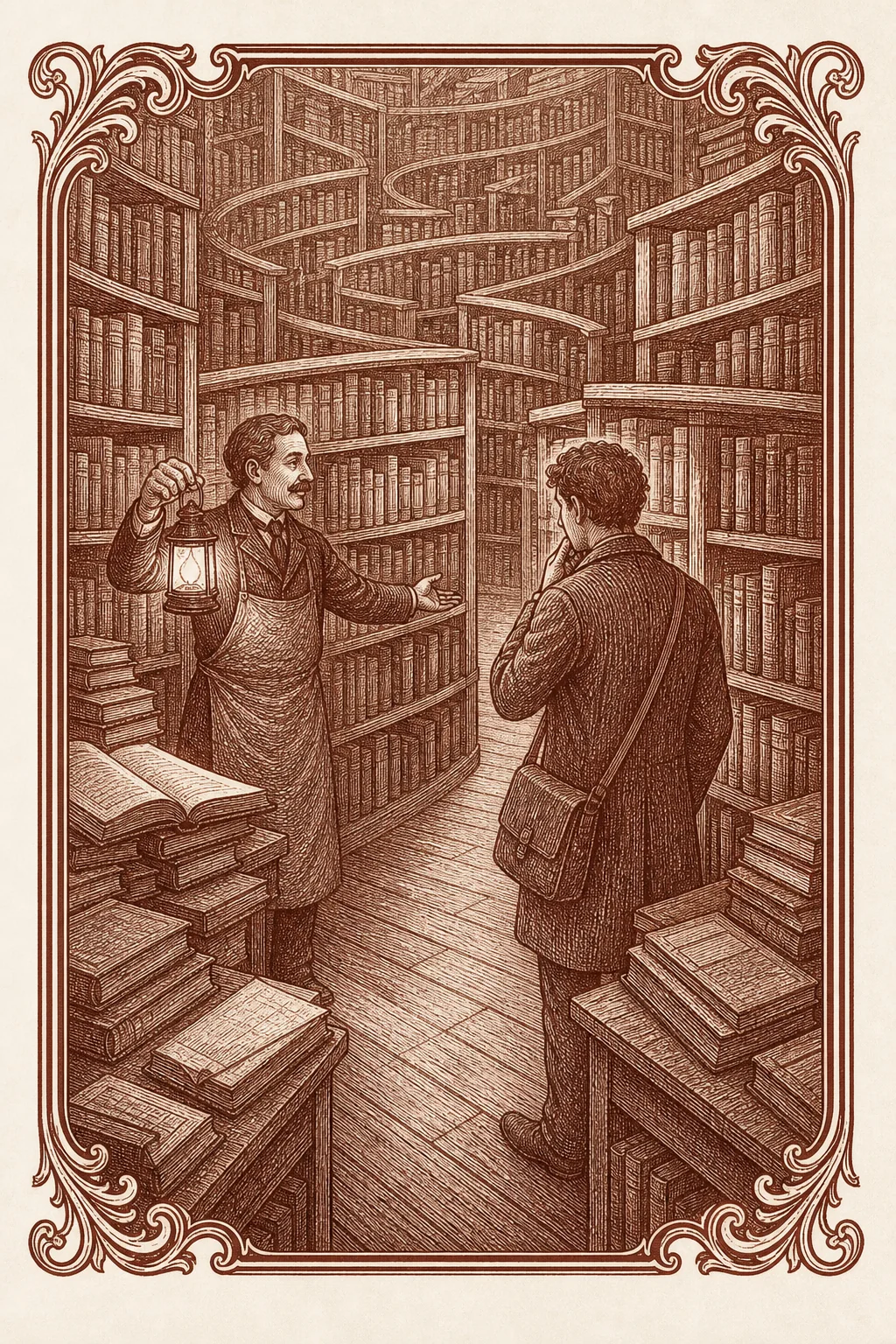
When there are too many paths, the craft is helping one of them appear again.
We usually think the problem is scarcity.
Sometimes it is.
But in the world of books, excess also disorients. Thousands of titles, endless pages, rankings, recommendations, ads, metadata, covers optimized for thumbnails, lists of what one should read before dying, before summer, before thirty, before being left behind by the algorithm.
Abundance does not automatically produce freedom.
It can produce paralysis.
It can produce imitation.
It can produce the feeling that everything is available and nothing is waiting for us.
The bookseller’s work begins there: not by reducing the world, but by making a path through it. A good recommendation is not a command. It is a bridge between a reader’s present and a book that might alter it.
This is why the bookstore is not only a reduced catalogue. A reduced catalogue is merely less abundance. A bookstore, when it works, is abundance made legible by a situated intelligence. The difference is decisive. One can have few books and still reproduce the same non-place logic: the same fashionable titles, the same fear of risk, the same table designed by external campaigns. And one can have a modest table that opens more world than an infinite scroll.
The bookseller’s task is not to compete with infinity.
It is to make finitude meaningful.
Reading without reading

Reading tables, absences and gestures: a form of reading that does not always pass through the page.
There is a form of knowledge that comes from reading.
There is another, humbler and very real, that comes from being among books every day.
The bookseller does not need to have read everything. That fantasy is childish. No one reads everything. But the bookseller learns how books behave: which ones return, which ones are asked for with embarrassment, which ones disappoint after a fashionable week, which ones survive in whispers, which ones a reader buys for someone else and later returns to buy for themselves.
This is reading without reading.
Not ignorance.
Situated knowledge.
It is the knowledge of hands, shelves, questions, failed recommendations, returned books, marginal notes, editions that age badly, covers that lie, readers who change.
Not all value is scalable
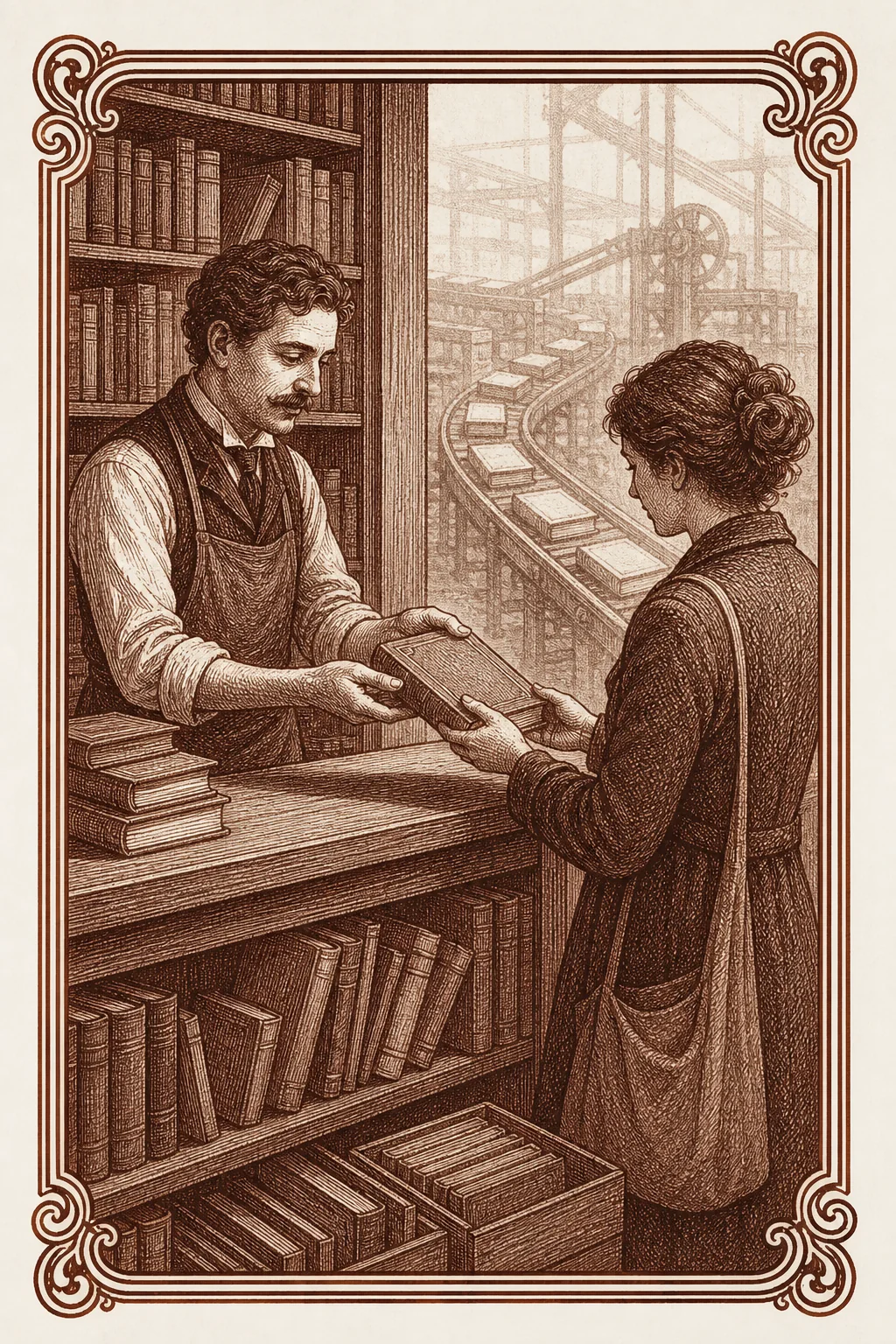
A situated recommendation resists the logic of automatic multiplication.
The contemporary economy loves what scales.
A recommendation system scales.
A bookseller’s conversation does not.
A ranking scales.
A careful hesitation does not.
Metadata scales.
Trust does not scale cleanly.
This does not mean the non-scalable is inefficient. It means it belongs to another order of value. The bookstore is one of the few cultural places where the relation between book and reader can remain local, embodied, interruptible and responsible.
A platform can suggest “similar titles.”
A bookseller can say: not that one, not yet.
That difference matters.
The bookstore as threshold
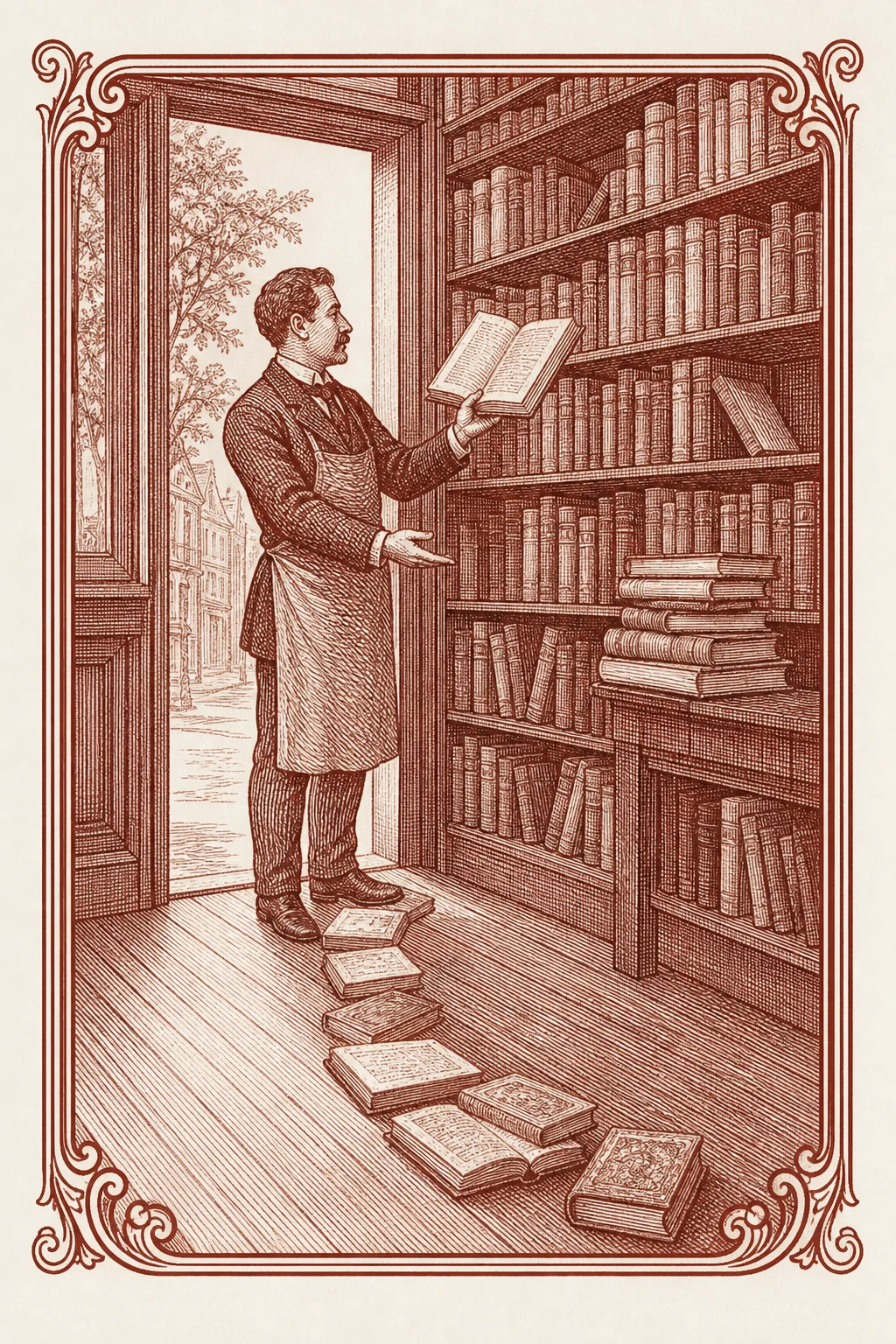
The bookseller as threshold: when the book stops being inventory and becomes possibility again.
A bookstore is not only a shop.
It is a threshold between private desire and public culture. The reader arrives with something often vague: curiosity, fatigue, obligation, grief, vanity, gift anxiety, school assignment, political rage, nostalgia, boredom. The bookstore gives that vagueness a shape without fully capturing it.
The threshold is important because books are not neutral objects. They can console, irritate, form, mislead, open, close, flatter, discipline, free, bore, radicalize, accompany. To place them before a reader is not the same as placing screws in a drawer.
The bookseller’s craft is not sacred.
It is practical.
And because it is practical, it is political.
The craft is not decorative
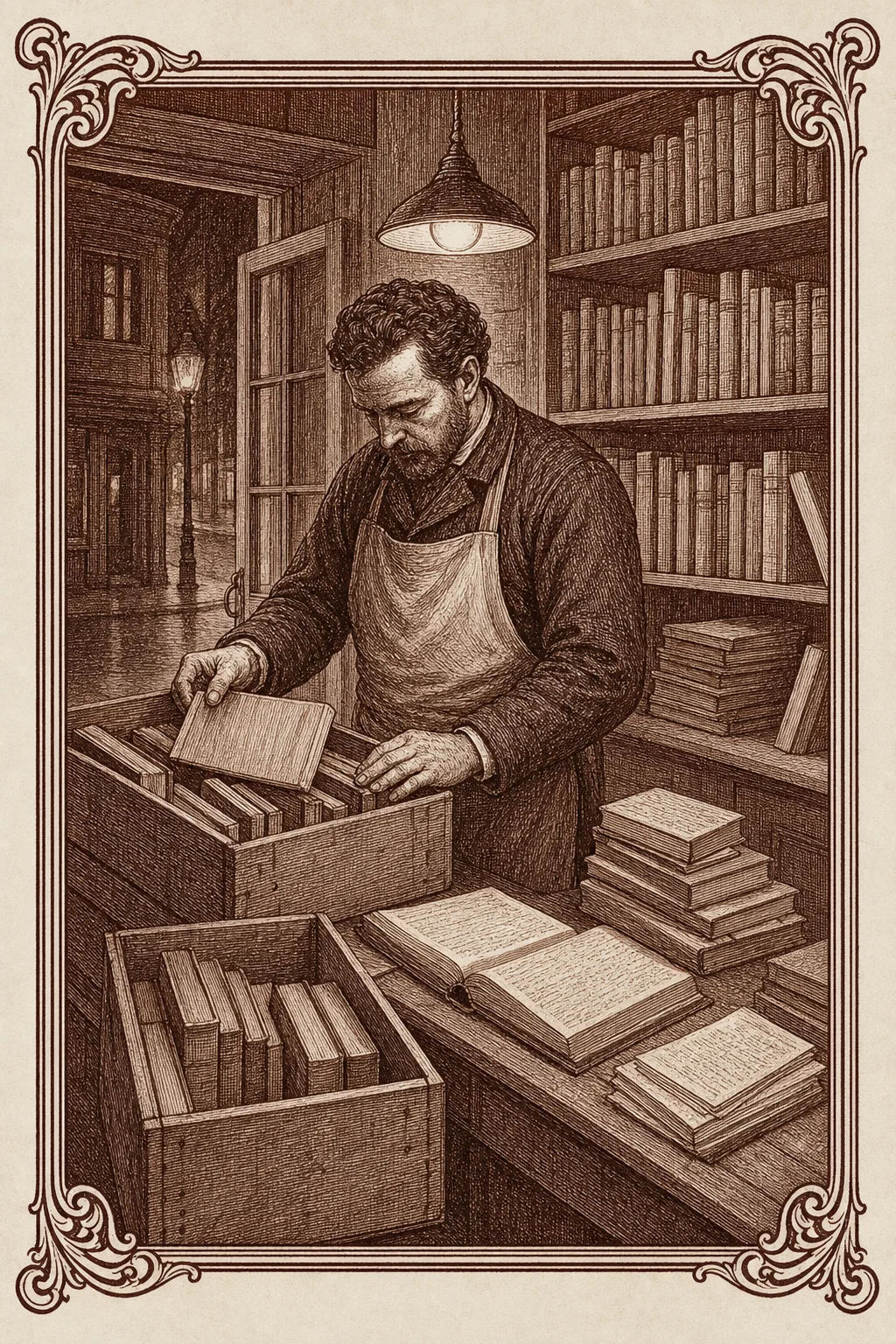
The craft is also boxes, dust, calculation, fatigue and judgment.
Many defenses of bookstores become sentimental too quickly.
The smell of paper.
The wooden shelves.
The handwritten card.
The small bell on the door.
All of that can be beautiful, but it is not the core.
The core is work: selecting, buying, rejecting, remembering, cleaning, pricing, ordering, recommending, returning, negotiating, paying, listening, reading enough, admitting ignorance, building trust slowly and losing it quickly if the recommendation is careless.
The craft is not decoration around the book.
It is part of the book’s social life.
That work is also physical. Boxes arrive. Books are damaged. Invoices do not match. A distributor sends what was not ordered. A customer wants the edition with a cover that no longer exists. Someone asks for Onetti but means Benedetti, or asks for Benedetti but needs Onetti. A school needs thirty copies tomorrow. A reader wants “something good” and cannot say what good means today.
The bookseller translates between those worlds.
This translation is not heroic. It is repetitive, fallible, sometimes badly paid and often invisible. But without it, the book enters the public world with less friction and less care. The algorithm can process preference. The bookseller can recognize hesitation.
Used books teach too
Used books are often treated as secondary merchandise.
They are not.
They bring another temporality into the bookstore. They do not arrive under the pressure of novelty. They come from houses, readers, inheritances, moves, failures, discoveries, school libraries, old editions, forgotten enthusiasms.
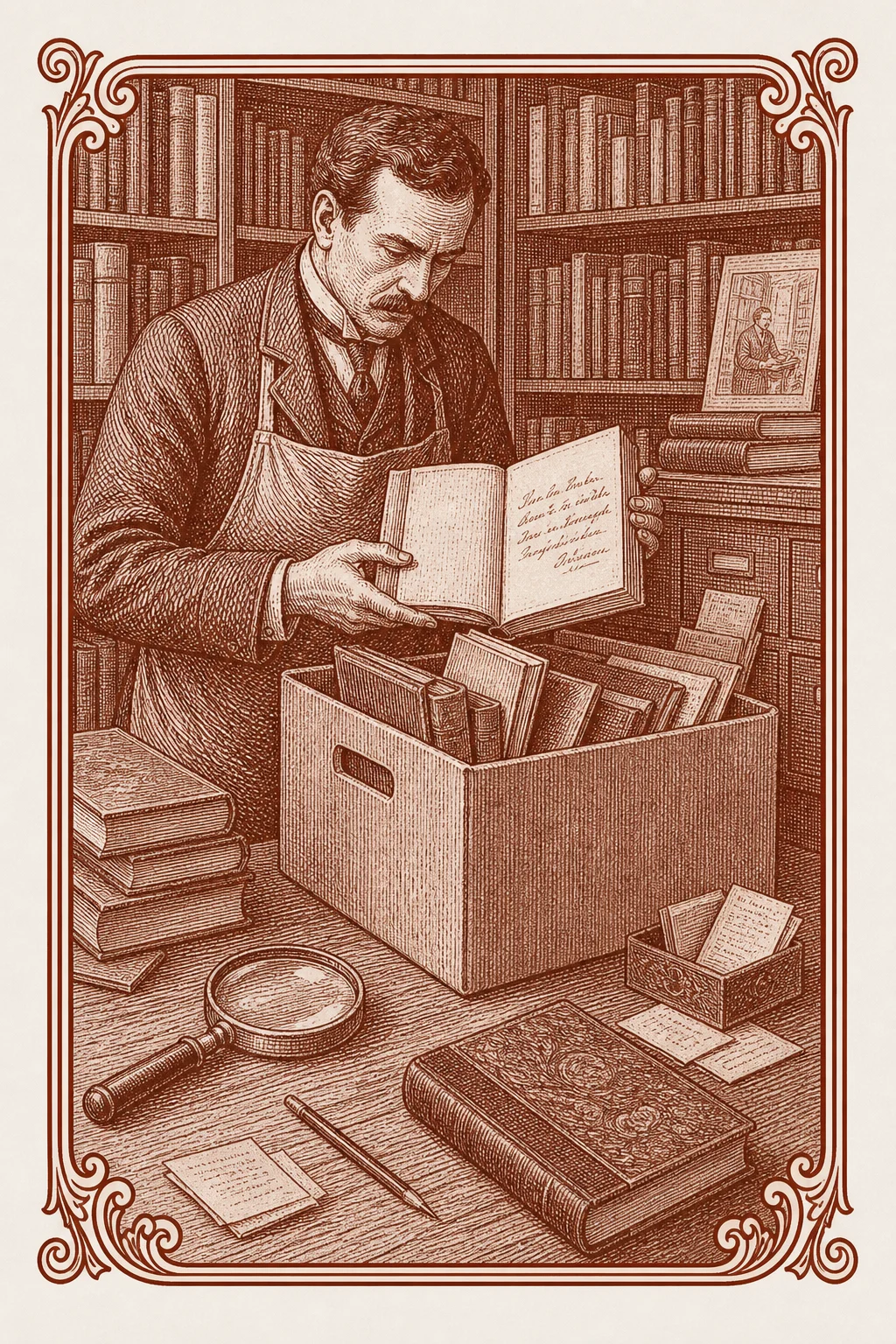
Invisible work: opening an ordinary box as if listening to an incomplete biography.
To open a box of used books is to read a life partially. What was kept? What was abandoned? What did someone underline? Which edition survived humidity? Which book appears three times because a city once read it and then forgot?
The bookseller who works with used books does not only price objects.
They rescue possibilities.
They return books to circulation when the new-book chain has already moved on.
They allow a reader to enter an author cheaply, unexpectedly, sideways.
There is another point: used books undermine the tyranny of presentism. A bookstore that only shows what has just arrived can end up teaching readers that the literary world is a series of launches. Used books say the opposite. They remind us that the present is crowded with unfinished pasts.
That matters in countries where many books disappear quickly from formal distribution. A title may be culturally alive and commercially unavailable. A reader may need a book that the official chain has already abandoned. The used shelf becomes, then, a weak but real archive.
It is not perfect.
It is not systematic.
It depends on chance, boxes, memory and patience.
But culture has always survived partly through imperfect archives.
A chain is not a community
The book world speaks of the chain: author, publisher, distributor, bookstore, reader.
The word is useful but insufficient.
A chain can be cold.
A chain can transmit pressure without transmitting care.
A chain can make every link depend on the previous one while hiding who captures value and who absorbs risk.
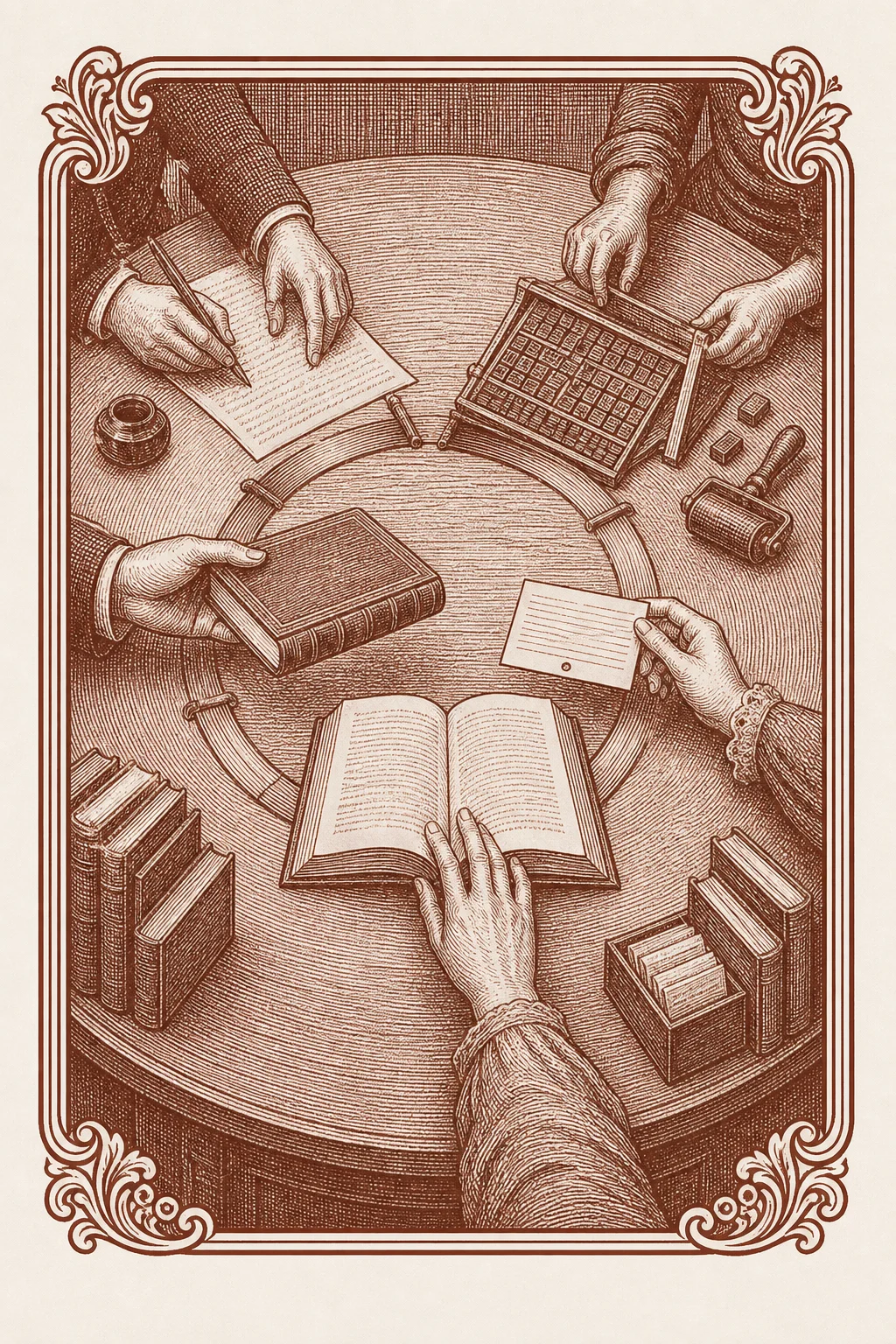
Chain, if one insists, but understood as a human circuit.
The better image is circuit. A book moves, returns, is recommended, fails, is revived, is lent, is ordered again, is discussed, is forgotten, is found. The bookstore is not the final retail point of a product. It is one of the places where the circuit becomes human.
That circuit requires trust.
It also requires money.
Romanticizing the bookstore while leaving it economically fragile is another way of not valuing it.
This is where many cultural speeches become dishonest. They celebrate the bookstore as neighborhood, refuge, cultural beacon, place of meeting, guardian of bibliodiversity. Then they buy where the discount is larger, where the shipping is free, where the platform has already absorbed costs that no small store can absorb.
No individual reader should be blamed for every purchase. Budgets are real. Convenience is real. But public discourse should at least stop pretending that cultural infrastructure survives on applause. If the bookstore performs a public function, the economic conditions of that function matter.
The chain becomes community only when the value of each link is recognized.
Against the false neutrality of the catalogue
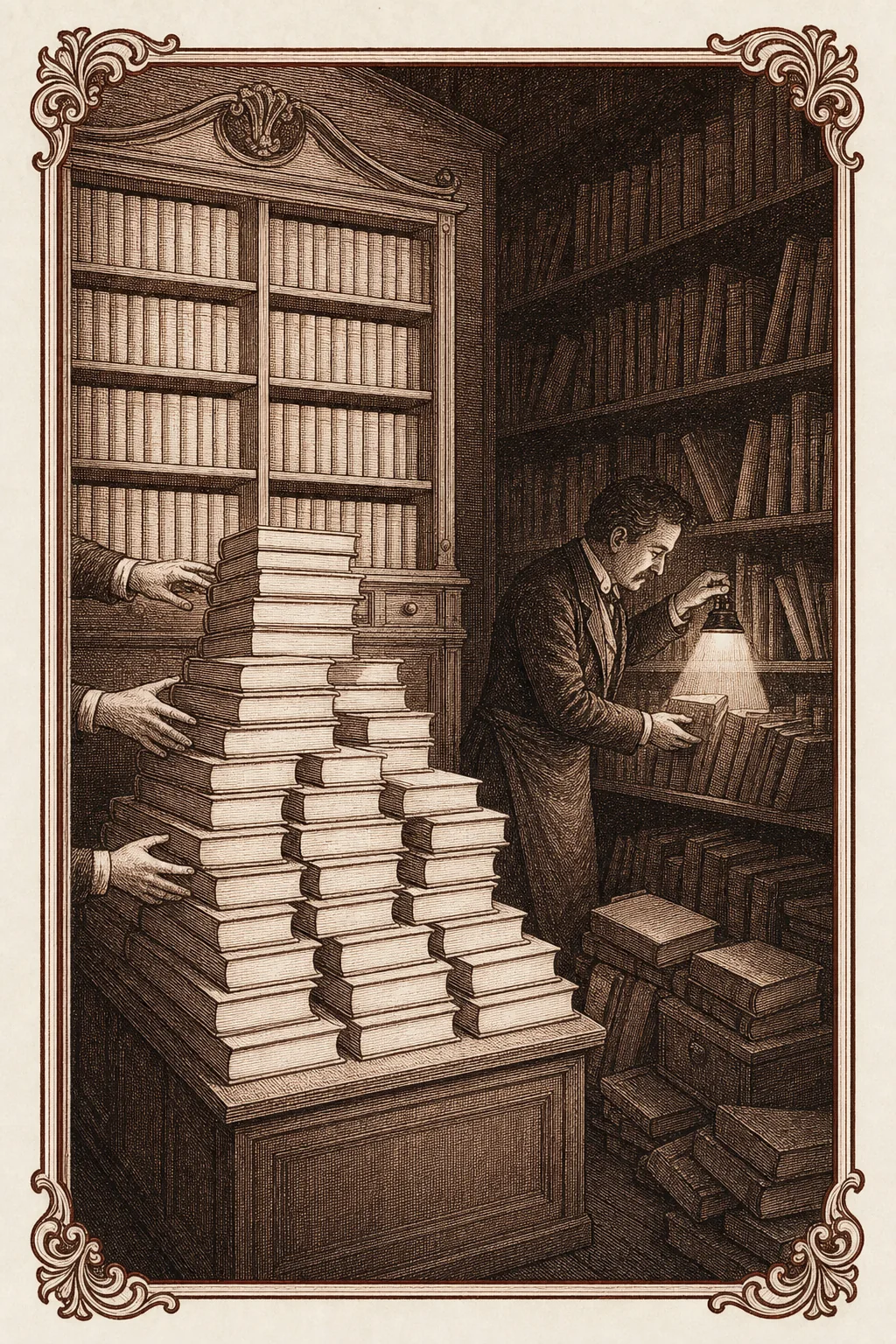
The catalogue never orders from nowhere: it always pushes some books toward the light.
The catalogue appears neutral because it is large.
It is not.
Every catalogue has a politics: what enters, what is visible, what is promoted, what is discounted, what is searchable, what is hidden under bad metadata, what disappears because the publisher is small, the distributor weak or the title old.
The infinite catalogue is not infinite for everyone.
It is organized by power.
The bookseller does not escape power, of course. A bookstore also selects, excludes, fails, repeats biases. But the selection is visible, discussable, accountable in a way the platform’s ranking often is not. One can ask the bookseller. One can disagree. One can see the table.
That visibility matters.
The platform’s table is usually hidden. It looks like personalization, but it is also advertising, margin, logistics, stock, behavioral prediction and corporate priority. It tells the reader: this is what appears for you. It rarely says why.
The bookstore table is less efficient and more exposed. Its errors can be seen. Its obsessions can be noticed. Its limits can be criticized. That vulnerability is a democratic virtue. A visible mediation can be challenged; an invisible mediation becomes environment.
The goal is not to pretend the bookseller is neutral.
The goal is to prefer mediations that can answer.
This is also why the catalogue cannot be the only democratic answer. “Everything is there” sounds generous until one asks where “there” is, who orders it, who pays for visibility, who disappears after the first page of results, who can afford the logistics and who is made to feel that not appearing is the same as not existing.
The bookstore cannot solve all of that.
But it can create a counter-scene.
In that counter-scene, the small publisher may have a table. The local author may have a conversation. The used copy may sit beside the new book. A title without advertising may remain visible because someone believes in it. That is a modest power, but it is power.
The false neutrality of the catalogue is dangerous precisely because it hides its own editorial work. The bookstore, at least, performs its editorial work in public.
The bookseller does not replace the reader

A good bookseller does not decide for the reader: they widen the field in which the reader decides.
None of this means the bookseller should become an authority that tells readers what to read.
The bookseller does not replace the reader.
The bookseller accompanies the reader’s risk.
A recommendation is successful not when it proves the bookseller right, but when it opens a path for the reader. Sometimes that means giving what was asked for. Sometimes it means offering a deviation. Sometimes it means leaving the person alone. The craft includes knowing when not to intervene.
The reader’s freedom is not threatened by mediation.
It is often made possible by good mediation.
Caring for bookstores is not freezing them
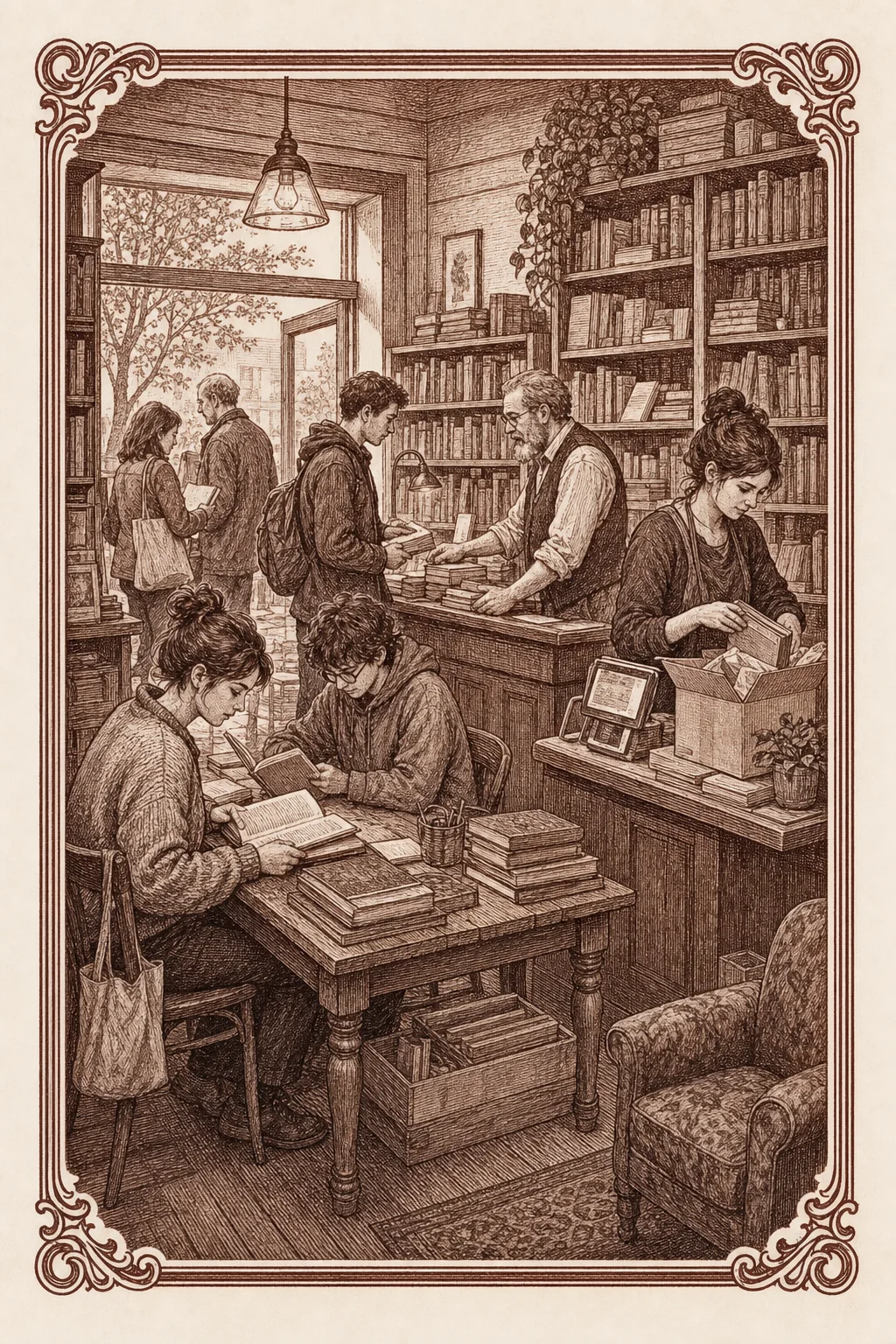
Caring for a living bookstore means reading its time without freezing the craft.
Defending bookstores does not mean freezing them in a picturesque past.
Bookstores can be badly run.
They can be elitist.
They can be closed to new readers.
They can confuse taste with gatekeeping.
They can refuse technology out of laziness rather than conviction.
They can mistreat authors, employees and customers.
A defense without criticism becomes folklore.
The point is not to protect every existing practice. The point is to defend the function that a good bookstore can fulfill: orientation, access, memory, criticism, community and economic mediation for books that would otherwise disappear into abundance.
Price is not enough to name value
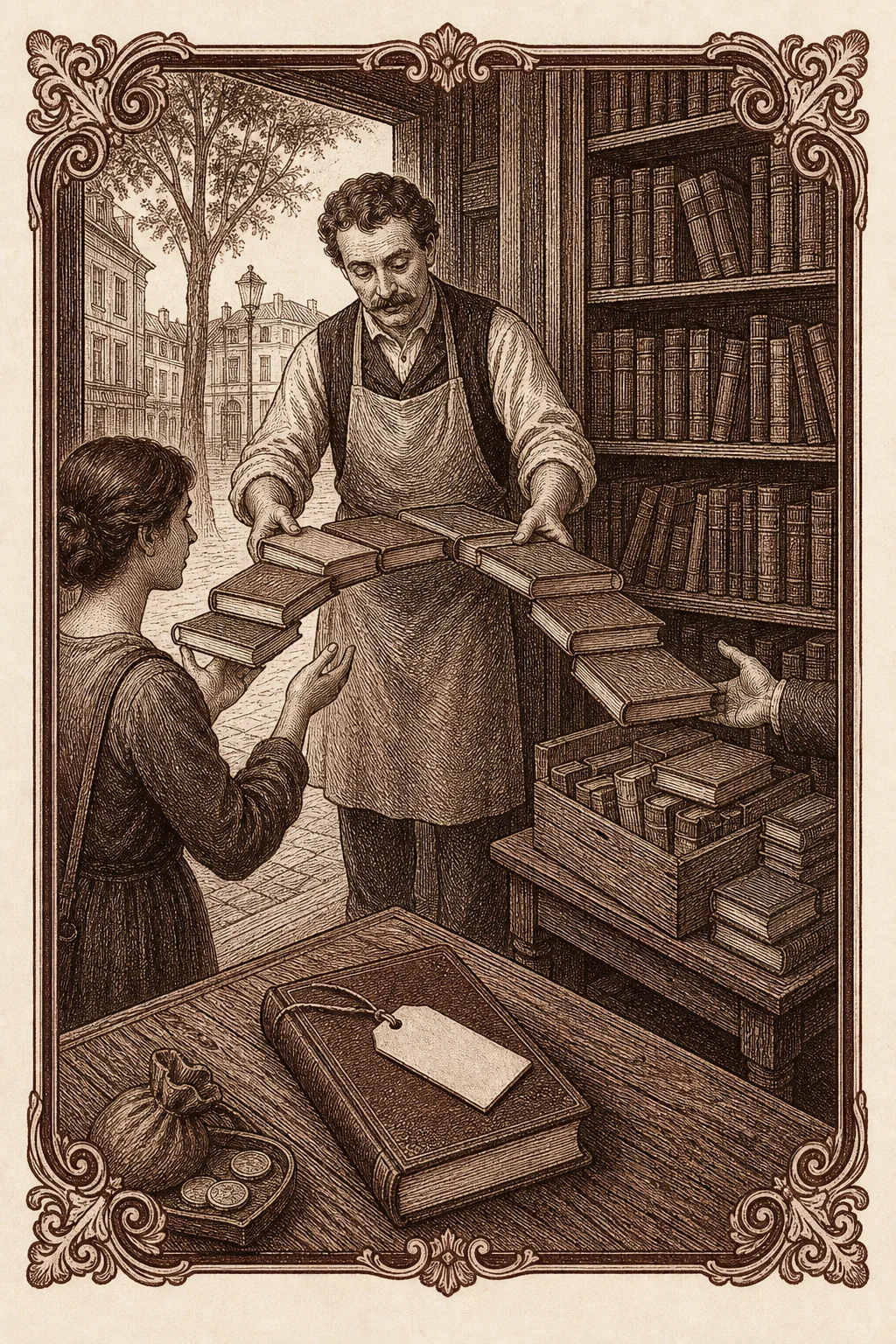
Price marks a figure; value appears in the relation that makes a reading possible.
The debate around fixed book price matters because price affects the ecosystem. If large actors can discount aggressively, independent bookstores lose one of the few conditions that allow them to compete in something other than scale.
But price is not enough to name value.
A bookstore’s value is not only that it sells the same book at the same price.
Its value is the relation around the book: the recommendation, the table, the conversation, the rescue of the used copy, the local reader, the school order, the author event, the slow trust that no platform can fully imitate.
Defending price without defending booksellers would be a thin policy.
Defending booksellers without thinking about price would be naive.
The price debate also reveals a deeper confusion. Many people speak of books as if they were pure cultural goods until the moment payment appears. Then the book becomes a commodity like any other and the cheapest channel seems morally obvious. But if the book has a cultural ecology, price cannot be separated from the places that sustain that ecology.
A fair price does not guarantee a good bookstore.
But destructive price competition can make good bookstores impossible.
This does not mean the reader must become a moral hostage of the bookstore. Readers have budgets. Students have budgets. Workers have budgets. Families have budgets. The defense of bookstores cannot become a sermon against people who buy where they can.
The political point is elsewhere: if society wants bookstores, it has to stop organizing the market as if only scale mattered. It has to understand that the small margin of a book may be paying for advice, storage, returns, events, cultural memory, local employment, taxes and a door that remains open in a neighborhood or town.
The platform can make those costs disappear from view.
It does not make them disappear from reality.
Putting the bookseller in place
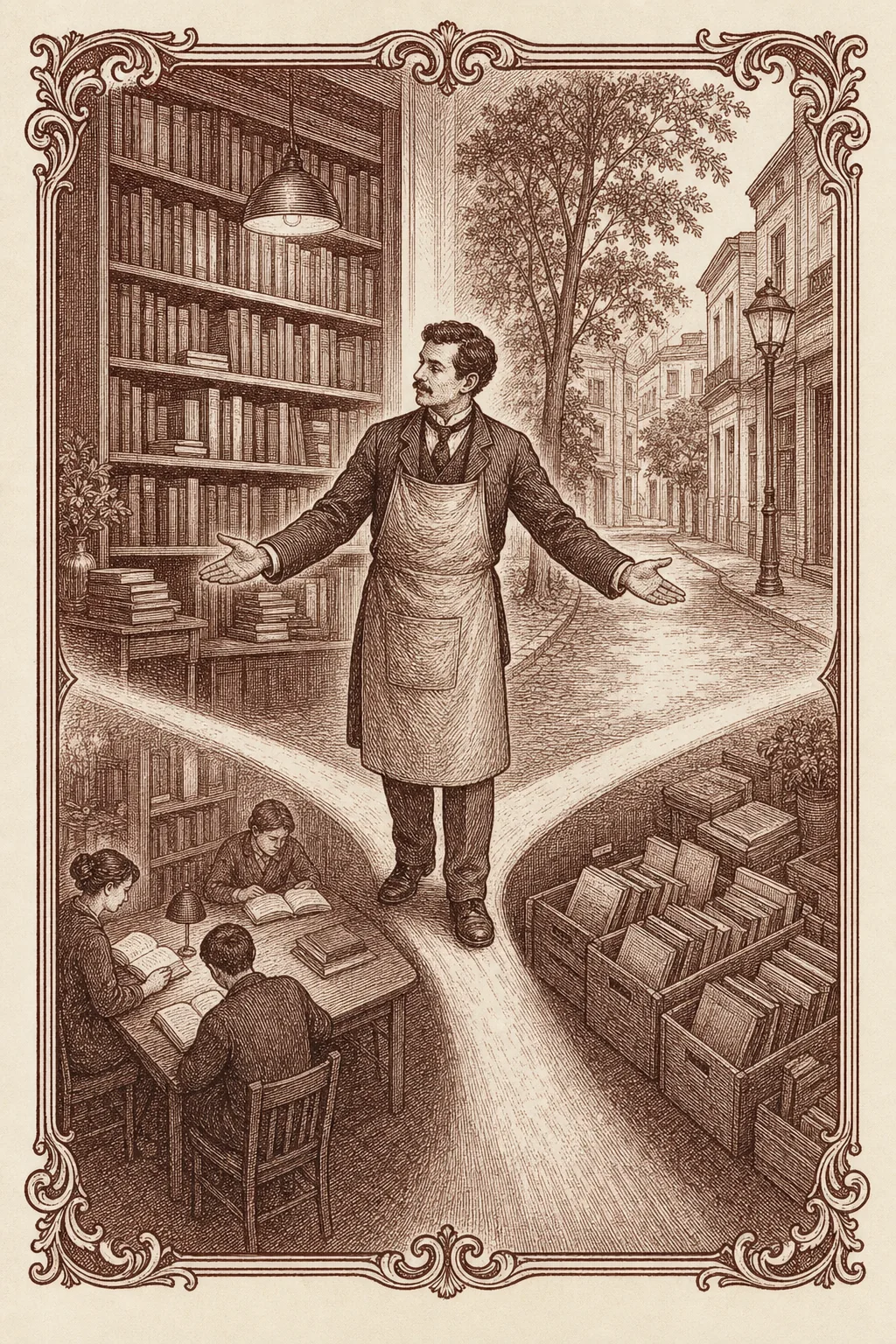
To approximate: to put books, readers, neighborhoods, memories and conversations in contact.
To put the bookseller in their place does not mean putting them above the author, the reader or the publisher.
It means recognizing the specific place they occupy.
The author writes.
The publisher builds a book and a catalogue.
The distributor moves it.
The bookseller gives it situated visibility.
The reader completes the circuit in a way nobody else can.
When one of those places is erased, the book world becomes poorer. When the bookseller is treated as a mere point of sale, the cultural function of the bookstore becomes invisible just when it is most needed.
Putting the bookseller in place also means refusing an inflated self-image. A bad bookseller can damage books. A lazy recommendation can close a path. A store that only repeats the safest titles can become a miniature platform with better lighting. The point is not to canonize the trade, but to demand it.
If the bookseller has value, the bookseller has obligations.
Read enough.
Listen better.
Admit ignorance.
Risk beyond the obvious.
Care for the used book as more than cheap stock.
Respect the reader who buys one book a year.
Remember that a recommendation can be an invitation, not a performance of superiority.
The praise of booksellers has to include that standard. Otherwise it becomes guild vanity.
A defense without folklore
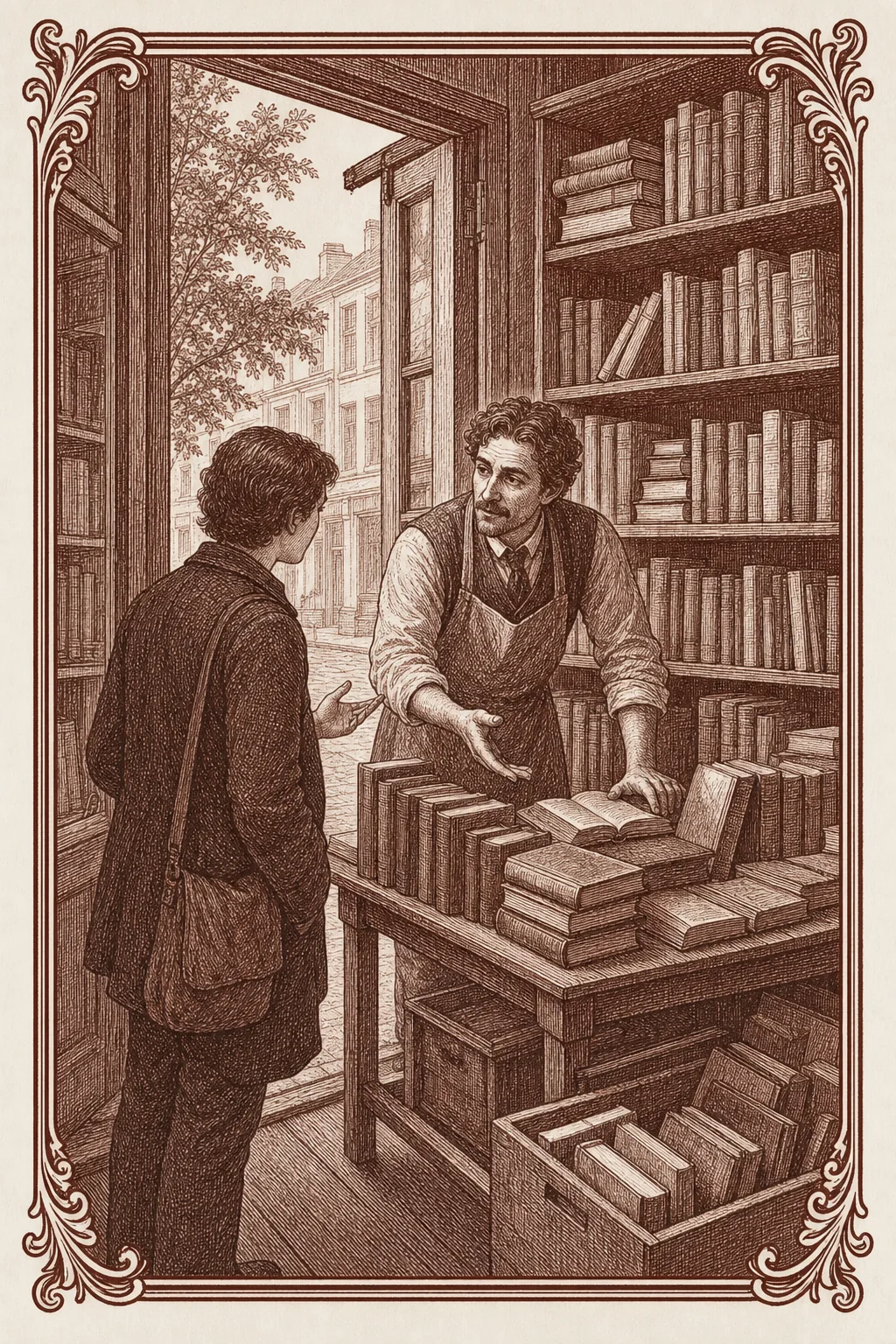
A different door: less halo, more listening, work and responsibility.
The bookseller should not be defended as a quaint survivor.
The bookseller should be defended as a worker of orientation inside excess.
As someone who turns inventory into encounter.
As someone who knows that not every valuable book arrives with a campaign.
As someone who can rescue a used copy without turning poverty into aesthetics.
As someone who can say no to the false bestseller, yes to the strange book and wait for the right reader.
Waiting is part of the craft. Not every book finds its reader immediately. Some books need to remain visible for weeks, months, sometimes years. The platform punishes that patience because it measures relevance through speed. The bookstore can practice another temporality, if it has enough oxygen to do so.
That patience is not only commercial stubbornness.
It is a cultural wager.
It says that a book may deserve time before being declared dead. It says that value does not always announce itself through demand. It says that the public can be formed, not merely served.
That is the final argument against the non-place.
The non-place serves a user.
The bookstore receives a reader.
The difference is not decorative. A user is processed through flows. A reader arrives with a history, a body, a budget, a mood, a confusion, a loyalty, a prejudice, a secret need. The bookseller may fail to see all that. But the possibility of seeing it still exists.
And that possibility changes the book.
The book is no longer only an item located by search. It becomes a relation proposed in a place. It can be refused, discussed, postponed, recommended again later. It can wait differently because someone is waiting with it.
Against the non-place does not mean against technology, platforms or catalogues.
It means against a world where books circulate without mediation, without memory and without responsibility for the reader standing before them.
Not all books wait in the same way.
Some need a shelf.
Some need a table.
Some need a bookseller.
And some need a bookseller for a long time before anyone notices. That is perhaps the least scalable part of the trade: keeping alive a possibility that has not yet become demand. The non-place is impatient because it reads demand as the only proof of value. The bookstore can be patient because it knows that readers are not only measured; they are formed.
This does not make the bookstore pure.
It makes it responsible.
The good bookstore has to earn that responsibility every day: by choosing better, listening better, paying attention to price, making room for used books, refusing the comfort of the obvious and accepting that a reader can leave without buying and still have been part of the life of the place.
That is value too.
Not a value that fits easily into a dashboard.
But a value without which the book becomes poorer, even when it remains perfectly available.
That is the final paradox: availability can grow while encounter shrinks. The defense of booksellers begins from that paradox, not from nostalgia. A book may be everywhere and still need a place.
And a place is not only coordinates. It is a set of obligations. Someone opens, orders, remembers, chooses, pays, returns, recommends, listens and keeps the table alive long enough for a reader to arrive. The non-place removes those obligations from view. The bookstore makes them visible, sometimes clumsily, sometimes beautifully, always materially.
That materiality is why the praise of booksellers should not sound like a postcard. It is a defense of a concrete cultural labor that can disappear while everyone continues saying they love books.
Loving books in general is easy. Sustaining the places where specific books meet specific readers is the difficult part, because it requires decisions, costs, time, mistakes and a kind of attention that no declaration of love can replace.
That attention is the place, and without it the bookstore becomes only another shelf inside the non-place.
Martín Álvarez
@unfalsoguru