
Sensitivity is not an elective
Many things fit on a university table.
An underlined book, a score, a computer, a slide rule, a cup of cold coffee, a question that cannot find an answer, a formula, a novel, a badly reproduced painting on a photocopy, the name of a philosopher we still do not fully understand. Education, when it is more than training, resembles that table: it does not arrange the world into clean compartments. It places things together and forces us to see relations.
Artificial intelligence has also sat at that table.
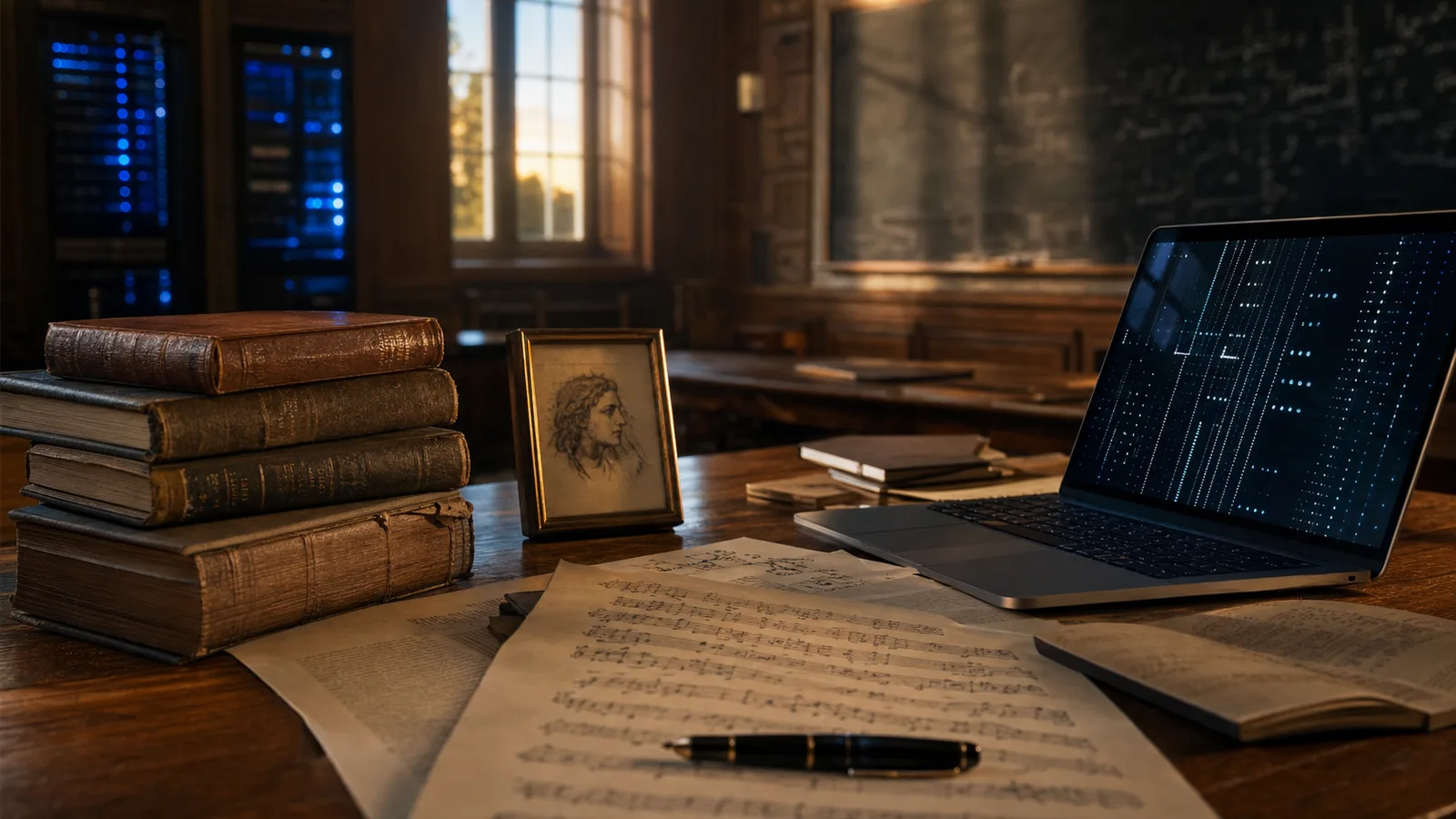
AI has sat at the table. The problem is not to expel it, but to remember what kind of table we want.
The easy reaction is to divide the room. On one side, engineers, programmers, data, models, efficiency, the future. On the other, literature, philosophy, music, art, the past, ornament, elective sensitivity. That division is comfortable, but false.
The problem is not that technology has entered education.
The problem is whether education still knows what kind of human being it is trying to form once technology becomes infrastructure.
Mujica was right, and it was not enough
In 2013, Jose Mujica said something that annoyed part of the educated class. Uruguay, he argued, needed more engineers and technical professionals. He was right about the country’s material weaknesses: infrastructure, production, energy, logistics, science, industry, technology. A country cannot govern the twenty-first century with speeches alone.
But being right was not enough.
Because the question never should have been engineering or humanities.
The question was what kind of engineering, inside what kind of country, serving what kind of life, with what ethical and political imagination.
A nation without technical capacity becomes dependent.
A nation with technical capacity but without sensitivity becomes dangerous.
It can optimize what should have been questioned.
It can automate injustice.
It can build dashboards over humiliation.
It can measure performance and forget why anyone wanted to learn in the first place.
AI changed the question
Artificial intelligence makes the old opposition even poorer.
It is no longer enough to say that students need to learn “useful” skills. Of course they do. They need mathematics, programming, statistics, scientific literacy, data judgment, basic understanding of systems and enough technical confidence not to be mystified by every vendor.
But AI also makes something else visible: the most threatened capacity is not only technical execution. It is judgment.
Models can answer.
They can summarize.
They can imitate.
They can compose an acceptable paragraph.
They can generate exercises, images, explanations, lesson plans, slogans, translations, code and bureaucratic language.
That means education cannot be reduced to producing answers. The machine is already too good at that.
Education has to form the person who knows what to ask, when to doubt, how to verify, what is missing, which consequence matters, which human being is being erased by a neat solution, and why a technically correct response can still be morally poor.
That change reaches every classroom. If the old exam asked for an answer, the new educational problem asks for a path: what sources were used, what alternatives were considered, what was discarded, what evidence supports the conclusion, what interests shape the tool, what language hides uncertainty, what kind of person is being trained by repeating this operation.
AI does not make method less important.
It makes method visible.
And method without sensitivity becomes bureaucratic technique: it can verify a citation and still miss cruelty, bias, boredom, desire, shame, exclusion or fear. The future does not need students who merely obey more sophisticated instruments. It needs people who can interrupt them.
That interruption is not anti-technology. It is the moment when technology becomes usable without becoming sovereign.
What is not automated so easily
What does not automate so easily is not decoration.
Attention.
Taste.
Historical sense.
Ethical discomfort.
Political imagination.
The ability to read a metaphor without reducing it to an explanation.
The ability to hear a false note in a beautiful sentence.
The ability to understand that a problem can be well defined and still be badly posed.
The ability to remain with a difficult text without immediately demanding that it become a summary.
The ability to notice when language is being used to hide power.
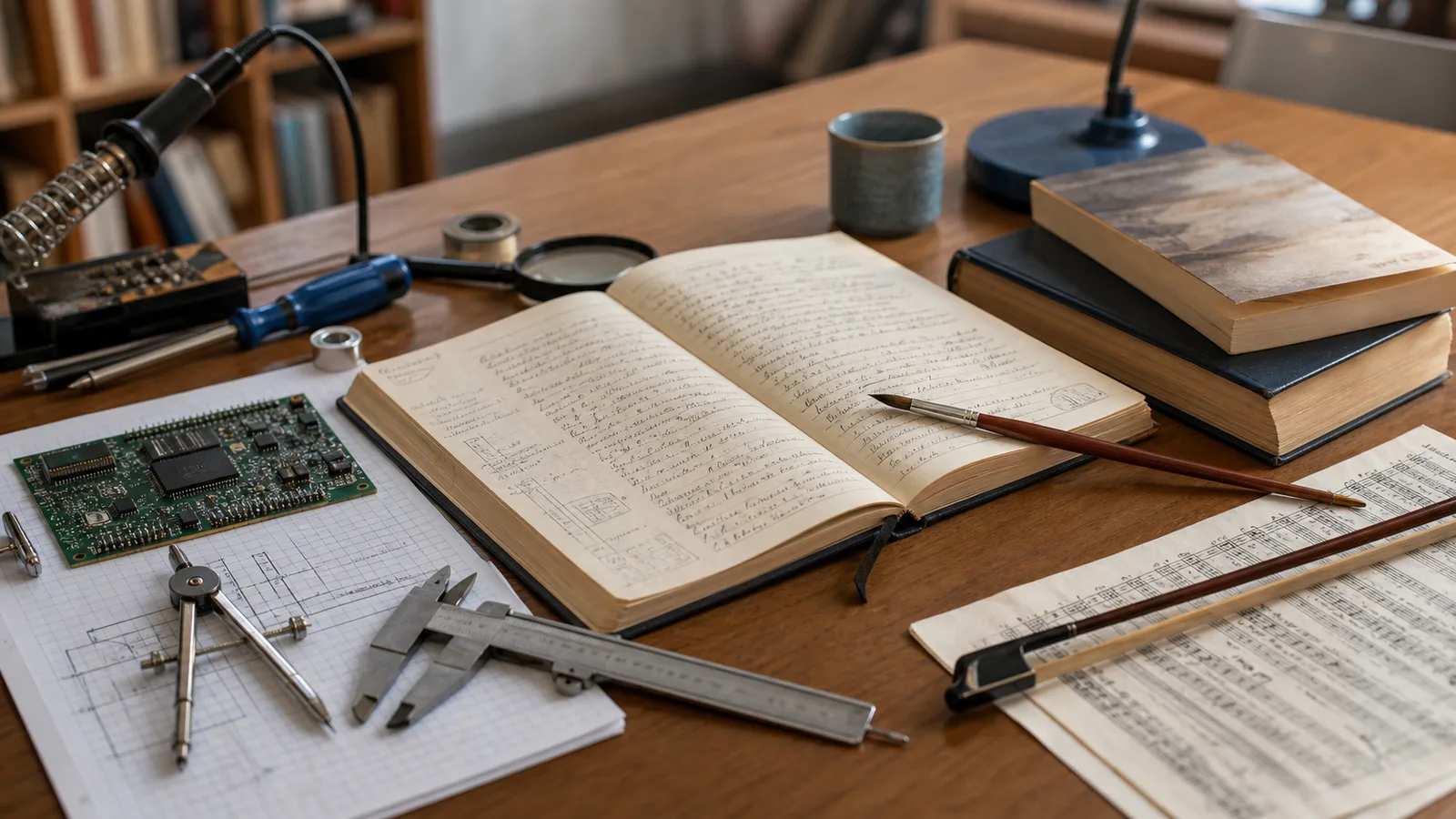
The real opposition is not technique against humanities. It is procedure without judgment against knowledge with responsibility.
This is why the humanities matter more, not less, when machines become fluent. Literature trains attention to ambiguity. Philosophy trains suspicion toward false necessities. History trains the sense that institutions are made and can be unmade. Music trains time, silence and relation. Art trains perception before classification. None of this guarantees goodness. But without it, intelligence becomes merely operational.
A difficult poem is not a failed summary. A philosophical paragraph is not always asking to be simplified. A painting is not a prompt waiting to become caption. Part of education consists in resisting the immediate conversion of every encounter into consumable explanation.
This resistance is not nostalgia.
It is training in complexity.
If AI turns every text into a digest before the student has struggled with it, the student may gain information and lose form. But form matters: the long sentence, the strange metaphor, the uncomfortable silence, the historical detour, the ambiguity that cannot be solved by choosing option A or B. Those are not obstacles to knowledge. Very often they are where knowledge happens.
Not against engineers
This is not an argument against engineers.
It is an argument against producing engineers, lawyers, teachers, doctors, programmers, economists and public officials without a common world.
The good engineer also needs humanities. Not to decorate a technical curriculum with noble words, but to understand that every technical system enters a social form. A bridge is not only calculation. A platform is not only code. A dataset is not only information. An interface is not only usability. A model is not only performance.
Each one distributes possibilities.
Each one creates winners, delays, exclusions, habits and dependencies.
Each one teaches people what they may expect from the world.
That is not outside technique.
That is technique doing politics.
The usefulness of the useless
The humanities have often been defended with a bad strategy: proving that they are useful in the language of those who despise them.
They improve employability.
They help communication.
They build creativity.
They support innovation.
All of that can be true, but it is not enough.
The humanities are useful because they protect dimensions of life that cannot be fully justified by immediate utility. Nuccio Ordine insisted on the usefulness of the useless. Martha Nussbaum defended the humanities as a condition for democratic life. Rodó, with all the limits of his time, understood that education could not be reduced to mechanical adaptation. C. P. Snow warned about the separation of scientific and literary cultures.
The point is not to return to an aristocratic museum of culture.
The point is to avoid a society where the only knowledge that survives is the knowledge that can invoice, scale or optimize.
Sensitivity does not mean softness
Sensitivity is often treated as softness.
As if it were sentimental fog.
As if the serious world belonged to numbers, and the human world were a decorative appendix.
That is wrong.
Sensitivity is a hard discipline.
It means perceiving differences that crude instruments erase.
It means not confusing speed with clarity.
It means seeing when a student is lost before the grade says so.
It means reading a political euphemism before it becomes administrative routine.
It means understanding that a person is not a data point even when data is necessary.
It means knowing that a model can produce a correct sentence and still miss the wound around which the sentence should be written.
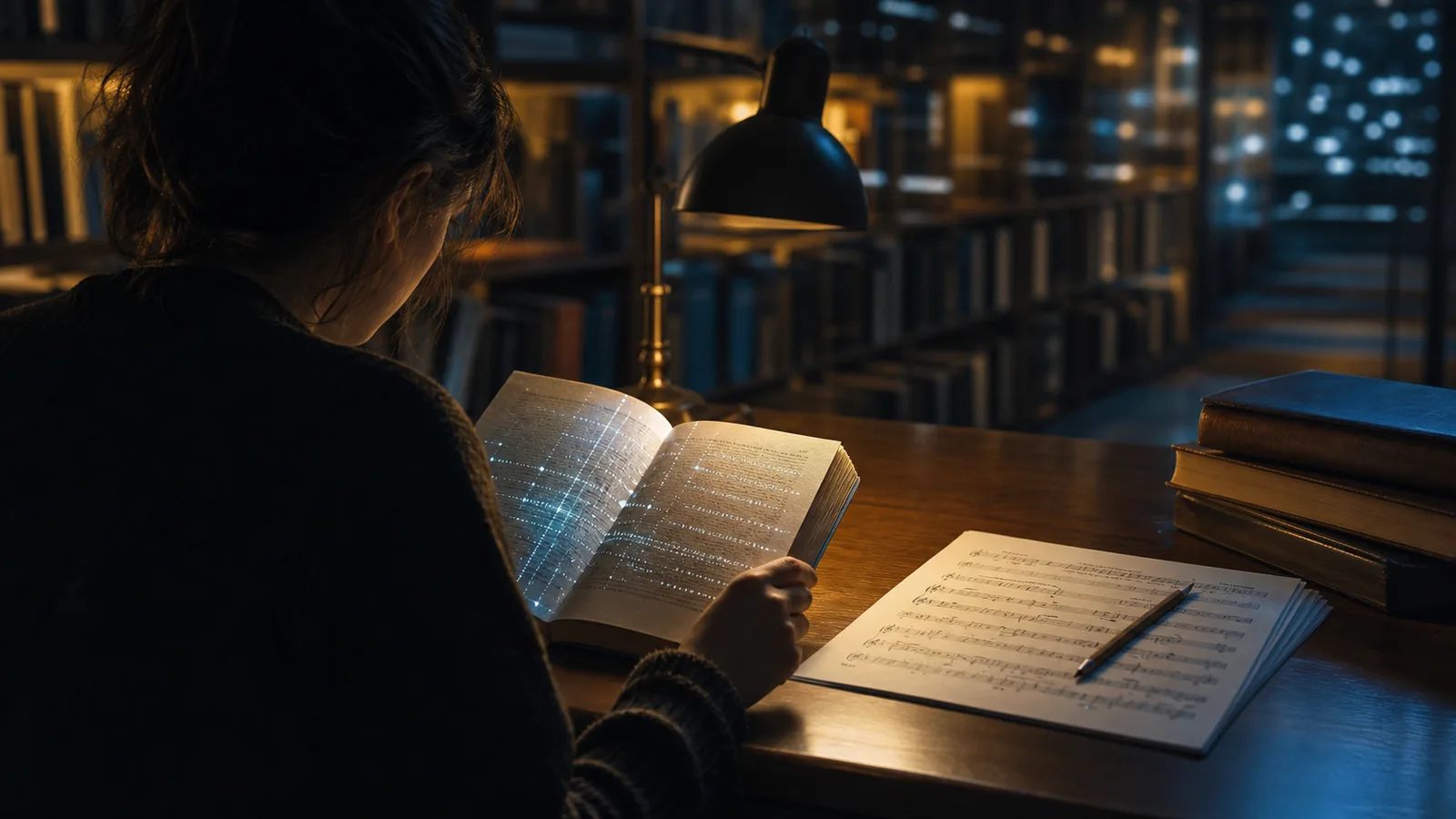
The question is not whether technology will enter reading. It already has. The question is whether there will still be readers capable of answering it.
The opposite of sensitivity is not intelligence.
It is stupidity with instruments.
What must be defended
We should defend technical education.
We should defend science.
We should defend programming, mathematics, statistics, laboratories, public research, engineering and productive capacity.
But we should defend them with humanities inside, not around them as ornament.
We need classrooms where AI can be used without becoming an excuse not to think.
We need students who know how to ask a model for help and also how to distrust its fluency.
We need teachers who can evaluate process, not only output.
We need public institutions capable of buying technology without buying dependence.
We need professionals who can say no to an efficient system when the efficiency is organized against human dignity.
And we need a culture that stops treating sensitivity as an elective subject.
Sensitivity is not an extra after the serious part.
It is one of the forms seriousness takes when the world becomes technically powerful.
AI will not make philosophy, literature, music or art unnecessary.
It will make their absence more visible.
A country that treats the humanities as decorative will not become more modern. It will become more administrable.
It will have more dashboards and fewer questions.
More indicators and less judgment.
More answers and less responsibility for asking.
That is why the defense of the humanities in the age of AI should not sound like a plea for old prestige. It should sound like public infrastructure. A school, a university, a library, a museum, a music room, a philosophy class and a literature workshop are not luxuries placed beside the real economy. They are places where a society rehearses attention before it needs it.
And it will need it.
Martín Álvarez
@unfalsoguru