The tool does not sign
The easiest way to avoid reading a text is to ask what tool touched it.
Not what it says.
Not what it risks.
Not what it gets wrong.
Not what it understands, steals, clarifies, simplifies, distorts or discovers.
The question arrives earlier, like a stain: was AI used?
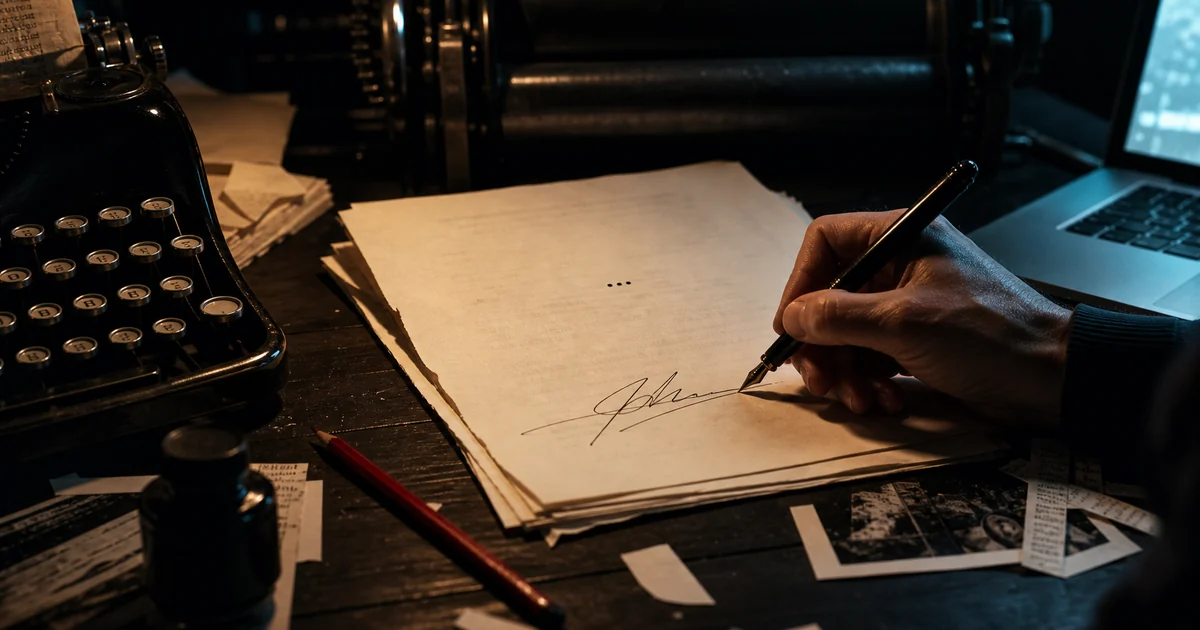
The tool can be on the table. The signature remains a human decision.
Once that question enters badly, the text stops being read as text and becomes evidence. The sentence is no longer syntax, rhythm, argument or decision. It becomes suspect material. The reader turns into a customs officer. Every smooth paragraph looks guilty. Every clean transition becomes a confession. Every uneven phrase, absurdly, becomes proof of innocence.
That is a bad way to read.
It is also a lazy way to discuss authorship.
The bad question
The bad question is not whether a tool was used.
Tools matter. They change cadence, speed, memory, access, correction, research, hierarchy and even self-deception. Nobody who writes seriously should pretend that a word processor, a search engine, a grammar checker, a model, a recorder or a transcription tool leaves no trace on the work.
The bad question is turning the tool into the whole verdict.
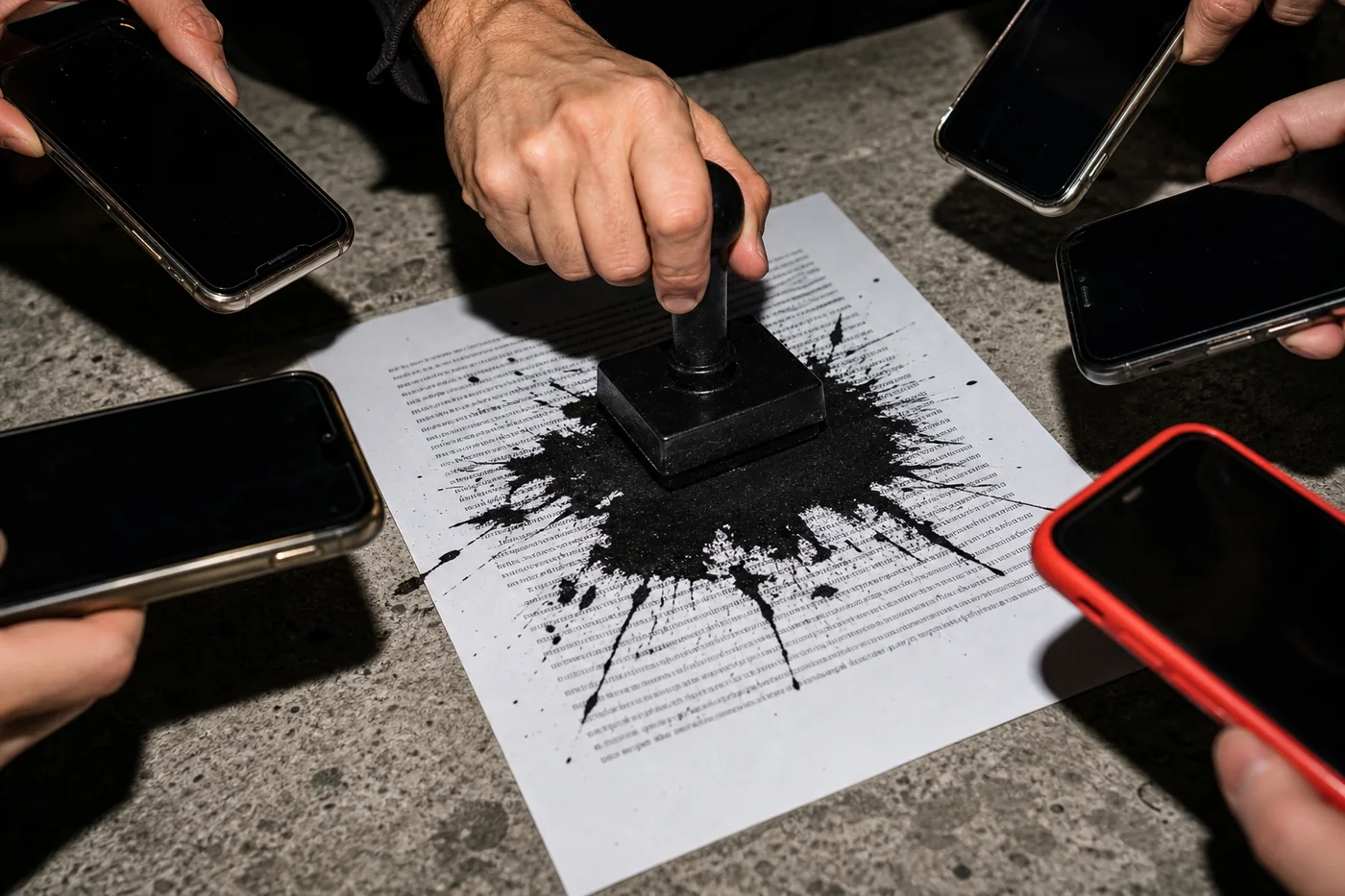
A text does not need to be refuted if it can be stained before it is read.
Saying “AI” can become a way of refusing to say “this paragraph is weak”, “this argument is false”, “this image is dead”, “this source is missing”, “this idea does not hold” or “this voice is not yours.” It replaces criticism with a detector fantasy.
That fantasy is convenient because it removes work from the reader.
Reading requires attention.
Detection promises authority without attention.
The adult question is harder: what was done with the tool, under whose responsibility, with what criterion, and what part of the text can be defended by the person who signs it?
The fantasy of the clean hand
There is an old moral comfort in imagining writing as a clean hand touching paper.
The author alone.
The sentence alone.
The mind pouring itself into language without mediation.
But writing has never worked that way. A text passes through notes, quotes, memories, dictionaries, other books, conversations, editors, formats, software, habits, borrowed rhythms and forgotten readings. It carries workshops, schools, deadlines, markets, platforms, archives, paper sizes, screen widths and correction marks.
That does not dissolve responsibility.
It makes responsibility more precise.
The fact that no text is pure does not mean every procedure is equivalent. There is a difference between using a tool to clarify a sentence and outsourcing the position of the text. There is a difference between asking for alternatives and accepting a voice that one cannot defend. There is a difference between documenting a process and hiding behind it.
The tool does not absolve.
The tool does not sign.
The media already crossed that door
The public scandal around AI writing often acts as if assisted production had just appeared.
It did not.
Newsrooms crossed that door years ago. The Associated Press automated earnings stories. The Washington Post experimented with automated coverage for the Rio Olympics and later with AI-powered election audio updates. Reuters built tools to help reporters find patterns in data. Forbes developed internal publishing assistants. The Guardian has published principles and updates on generative AI use.
Some of those uses are sensible. Some are dangerous. Some are bureaucratic. Some are boring. Some improve a workflow. Some threaten to turn journalism into formatted output with a human name above it.
The important point is not to pretend the door is closed.
It is to ask who remains responsible once the door is open.
If a newsroom uses automation to write a routine note, the question is not whether a machine touched the text. The question is whether the information is correct, whether the source is clear, whether the editorial criterion is public, whether a person can answer for the result, and whether the technology is being used to strengthen reporting or to thin it out.
The same applies to essays, books, newsletters, criticism, institutional texts and cultural work.
The name of the tool is not enough.
The chain of decisions matters.
A tool has no criterion
The central confusion is attributing criterion to the instrument.
A model can produce.
It can imitate.
It can vary.
It can summarize.
It can translate.
It can suggest a title, reorder a paragraph, propose a counterargument, flatten a style, invent a false source, rescue a connection, repeat a cliche or make a sentence less ugly.
But it does not know what should remain.
It does not know what should be cut.
It does not know what costs too much politically to soften.
It does not know when a clean sentence has become cowardly.
It does not know when a defect is also a signature.
That is the work.
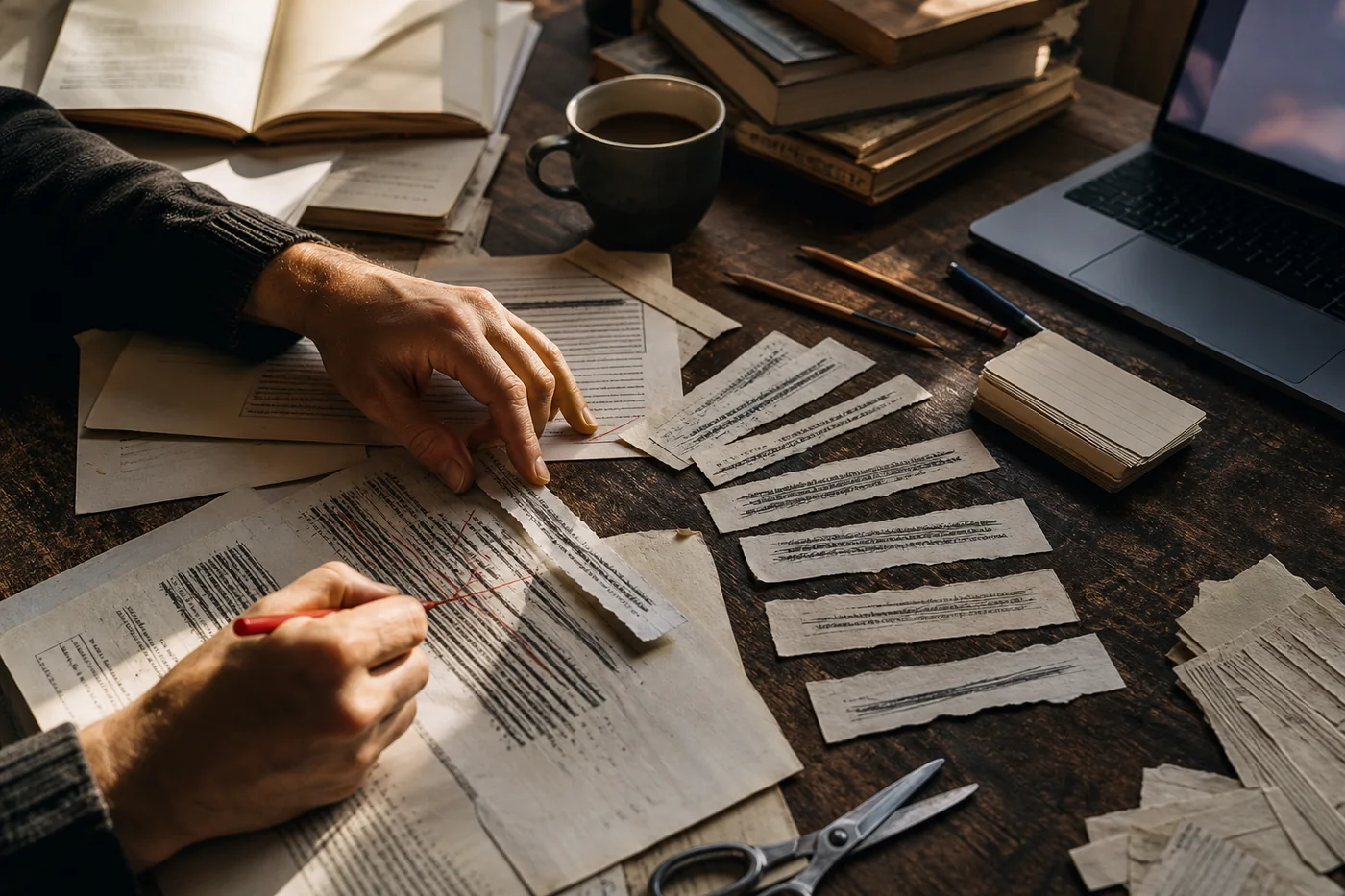
Craft appears when the cut begins: reading, crossing out, checking, moving, discarding.
The writer who uses AI responsibly is not the one who can say “nothing artificial entered here.” The responsible writer is the one who can explain what entered, what was rejected, what was checked, what was rewritten and why the final form belongs to the argument being signed.
Authorship is not virginity.
It is responsibility for a form.
The double standard
There is a double standard in many attacks on AI-assisted writing.
Some people tolerate ghostwriting, press teams, editorial rewriting, market formulas, SEO templates, institutional copy, consultants, communication departments and algorithmic distribution without scandal. But if a model enters the process, the moral alarm suddenly discovers purity.
That is not a defense of AI.
It is a defense of intellectual honesty.
If the problem is opacity, then opacity should bother us everywhere.
If the problem is laziness, then formulaic human writing should bother us too.
If the problem is industrial language, then we should criticize industrial language even when every sentence was typed by a person.
If the problem is loss of voice, then the question is not whether there was software. The question is whether there is voice.
The tool can make bad writing easier.
But it did not invent bad writing.
The bookseller’s criterion
There is a useful analogy in the bookseller’s trade.
A bookseller can use databases, distributor catalogs, metadata, sales histories, recommendation systems, spreadsheets and platforms. None of that replaces the moment when someone asks for a book and the bookseller decides what kind of answer is needed.
The decision is not just information retrieval.
It is mediation.
It includes taste, memory, context, risk, respect for the reader, and the ability to say: not that one, not now, perhaps this other book, perhaps wait, perhaps borrow before buying.
Writing with tools should be judged with the same seriousness.
The question is not whether the table has instruments.
The question is whether there is a craft capable of using them without becoming their assistant.
What should be required
We should require more, not less.
We should require authors to answer for what they publish.
We should require sources that can be checked.
We should require corrections when a tool introduces falsehood.
We should require editors who read and do not merely certify.
We should require disclosure when the use of AI changes the nature of the work, the promise made to the reader or the conditions of production.
We should require institutions not to hide cheap automation behind human signatures.
We should require readers to criticize texts, not only police their origin.
And we should require a distinction that is simple and demanding:
using a tool is not the same as delegating judgment.
The first can be part of a responsible process.
The second is an abdication.
Read the text
So read the text.
Read whether it thinks.
Read whether it risks anything.
Read whether it has sources.
Read whether the voice is alive or only well formatted.
Read whether the argument survives objection.
Read whether the author can stand behind it.
If the text is bad, say why.
If it lies, show where.
If it is empty, do not grant it drama.
If it is good, do not pretend that the name of a tool is enough to disqualify it.
The tool can help write.
It can also help avoid writing.
It can help think.
It can also help avoid thinking.
The difference is not in the tool.
It is in the person, institution and method that use it.
The tool does not sign.
Someone does.
Martín Álvarez
@unfalsoguru